
BLOG
- Home
- Blog
- Industry Sharing
- Ladder Pull Designs: How to Elevate Glass Doors and Modern Entrances with Premium Hardware
Ladder Pull Designs: How to Elevate Glass Doors and Modern Entrances with Premium Hardware
May 15,2026
Author : ALLWIN
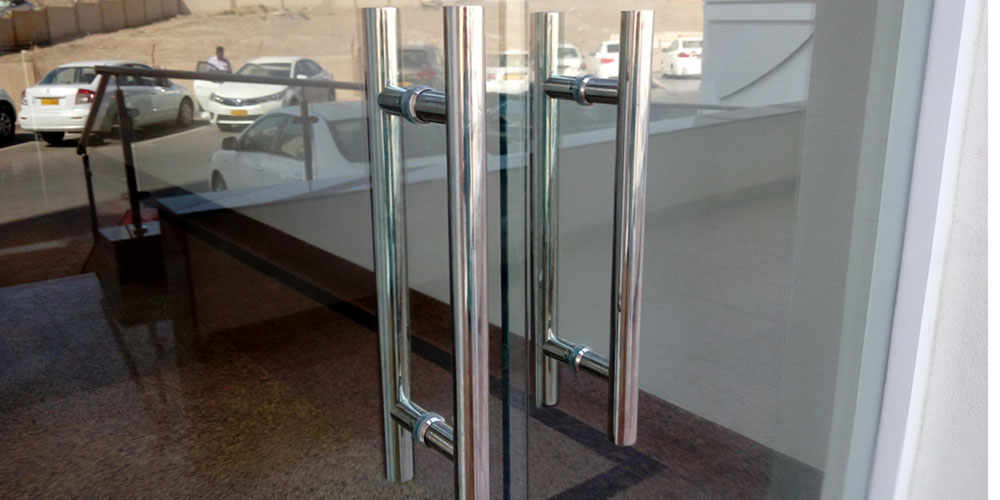
In modern architecture, the entrance is often the first point of contact between a visitor and a building. Beyond basic function, entrance hardware affects how the space feels, how people move through it, and how the brand or project is perceived. A well-designed ladder pull supports a clean architectural look while improving usability in high-traffic environments. With their long vertical form and simple profile, ladder pull handles are commonly used on frameless glass doors, pivot doors, and oversized commercial entrances where both appearance and durability matter.
This guide covers common ladder pull types, material considerations, ADA requirements, installation details, and key selection points for architects, contractors, and project buyers.
What is a Ladder Pull?
A ladder pull is a long vertical door handle with a parallel bar structure that resembles a ladder. Compared with traditional knobs or short pulls, ladder pulls create stronger vertical lines that emphasize door height and improve the overall proportions of an entrance.
These handles are commonly installed on frameless glass doors, wood doors, metal doors, and large pivot entrances where both appearance and usability matter. Their extended gripping area also makes them easier to operate from different hand positions, especially on larger or heavier doors.
In commercial and high-end residential spaces, ladder pulls are often treated as part of the overall entrance hardware system, not just as functional accessories. Their shape, finish, and mounting style all contribute to the visual identity of the space.
Exploring the Different Types of Ladder Pulls
Ladder pulls are available in several configurations depending on security needs, installation style, and design goals.
Locking Ladder Pulls
These models integrate locking cylinders or key systems directly into the handle assembly. They are commonly used for storefront entrances, offices, and commercial spaces where controlled access is required.
Non-Locking Ladder Pulls
Designed primarily for pulling function and visual presentation, these handles are often selected for interior glass doors or spaces where separate locking hardware is already installed.
Round Tube Ladder Pulls
Round profiles provide a softer and more contemporary appearance. They are frequently used in hospitality projects and minimalist architectural environments.
Square Tube Ladder Pulls
Square designs create a sharper and more structured visual effect. They are commonly used in modern commercial entrances and architectural projects with clean geometric lines.
Back-to-Back Mounted Pulls
Installed symmetrically on both sides of the door, these are among the most common configurations for frameless glass entrances. They provide balanced appearance and convenient operation from either side.
Offset Mounted Pulls
Offset mounting creates a more customized appearance and may improve clearance in specific layouts. These designs are sometimes selected for unique architectural concepts or limited-space applications.
Full-Height Ladder Pulls
Extending across a large portion of the door height, full-height pulls create a stronger visual statement and help emphasize vertical proportions. They are especially popular on oversized pivot doors and luxury commercial entrances.
Choosing the right configuration depends on the door type, traffic flow, security needs, and overall architectural style.
Key Benefits of Installing Ladder Pull Handles
One key advantage of ladder pull handles is their large gripping area. Unlike smaller handles, they allow users to operate the door comfortably from multiple positions without precise hand placement.
The extended structure also provides better leverage when opening heavier glass or pivot doors. In commercial environments with frequent use, this can improve operating comfort and reduce effort for the user.
From a design perspective, ladder pulls create visual continuity on tall entrances. Their vertical proportions complement modern architecture and can make entrances appear taller and more balanced.
Durability is another practical advantage. Ladder pulls are often used in busy environments such as office buildings, retail spaces, hotels, and public facilities. Stable mounting systems and strong structural materials help them maintain reliable performance over time.
Why Quality Stainless Steel is Non-Negotiable for Your Ladder Pull?
Material quality directly affects appearance, durability, and long-term maintenance. Stainless steel is widely used for ladder pull hardware because it offers corrosion resistance, structural stability, and a clean modern finish.
304 stainless steel is commonly used for general indoor applications and standard outdoor environments. It provides reliable durability for most commercial and residential entrances.
316 stainless steel offers stronger resistance to moisture, salt exposure, and harsh environmental conditions. It is often used for coastal projects, humid regions, commercial exteriors, and high-traffic public environments where corrosion resistance is especially important.
High-quality stainless steel also helps reduce surface staining, fingerprint visibility, and premature rusting. This is particularly valuable for maintaining the long-term appearance of glass entrances and architectural doors.
A Technical Specifications & Installation Guide for the Ladder Pull
Correct technical specifications are essential for stable installation and long-term reliability. One important measurement is the center-to-center distance (CTC), which defines the spacing between mounting points. Accurate measurement helps ensure proper alignment and a balanced appearance.
Glass compatibility should also be carefully reviewed. Hole diameter, glass thickness, and gasket selection must match the pull specifications to avoid excessive pressure or unstable mounting conditions. Protective gaskets help distribute pressure evenly and reduce direct contact between metal hardware and glass surfaces.
Different mounting systems also affect installation performance. Through-bolt mounting provides strong structural connection and is commonly used for frameless glass doors. Concealed mounting options may offer a cleaner appearance while maintaining secure attachment when properly engineered.
Paying attention to these technical details helps prevent loosening, misalignment, and unnecessary stress on the door panel over time.
Safety Standards: Navigating ADA Standards for Ladder Pull Hardware
In commercial and public spaces, ladder pull hardware may need to comply with ADA (Americans with Disabilities Act) requirements. These standards help improve accessibility and ensure that entrances can be used comfortably by a wider range of people.
ADA guidelines commonly address factors such as mounting height, clearance distance, and gripping dimensions. Ladder pulls are typically installed within a height range of 34 inches to 48 inches above the finished floor, depending on project requirements and door configuration.
Grip diameter and hand clearance are also important considerations. Proper spacing between the pull and the door surface allows easier operation and improves accessibility for users with limited hand mobility.
ADA compliance is not only about meeting regulations. It also helps create entrances that are more comfortable, intuitive, and user-friendly in daily operation.
Choosing the Right Length for Your Ladder Pull
Selecting the right ladder pull length involves both functional and visual considerations. Smaller or narrower doors generally work better with shorter pulls that keep the proportions balanced without overwhelming the entrance.
that keep the proportions balanced without overwhelming the entrance. Larger glass doors and oversized pivot systems often benefit from longer or full-height pulls. These designs help create stronger vertical continuity and enhance the visual scale of the entrance.
The relationship between door size and handle length can strongly affect the overall appearance. A properly proportioned ladder pull creates better visual balance while also improving usability.
In many architectural projects, full-height pulls are also used to create a more dramatic entrance experience while reinforcing the modern design language of the building.
Frequently Asked Questions (FAQs) Regarding Ladder Pulls
Q1: Can ladder pulls be installed on tempered glass doors?
A1: Yes. Ladder pulls are commonly installed on tempered glass doors, but proper hole preparation, gasket protection, and compatible mounting hardware are essential to prevent stress damage.
Q2: Is 316 stainless steel necessary for outdoor use?
A2: For humid, coastal, or exterior commercial environments, 316 stainless steel is generally recommended because of its stronger corrosion resistance. 304 stainless steel is often suitable for standard indoor or covered outdoor applications.
Q3: Are full-height ladder pulls more difficult to maintain?
A3: Not necessarily. Maintenance mainly depends on material quality, finish condition, and cleaning frequency rather than handle length alone.
Q4: What is the recommended pull diameter for commercial projects?
A4: The ideal diameter depends on ADA requirements, user comfort, and architectural design goals. Comfortable grip sizing is especially important in high-traffic commercial entrances.
Q5: Can ladder pulls be customized for project requirements?
A5: Yes. Many commercial projects require customized lengths, finishes, mounting styles, or integrated locking systems to match architectural specifications.
Elevating Your Project: Why We Recommend ALLWIN for Your Ladder Pull Needs
ALLWIN provides ladder pull manufacturing solutions for commercial entrances, frameless glass systems, and modern architectural projects. Controlled production processes help maintain dimensional precision, stable mounting tolerances, and structural consistency across large-volume orders.
ALLWIN specializes in stainless steel and brass hardware, including railing systems, glass fittings, door hardware, shower hardware, and related architectural components. With over 20 years of manufacturing experience, ALLWIN supports global brands and Fortune 500 companies through OEM and ODM cooperation.
For ladder pull production, polishing consistency, finish quality, and straight-line precision are especially important. Controlled surface finishing helps maintain visual uniformity across multiple units, while precision manufacturing supports cleaner installation and better alignment.
ALLWIN focuses on turning design concepts into stable, scalable production with dependable quality and reliable lead times, helping customers manage both project schedules and long-term product performance.
Conclusion
Ladder pulls are an important part of modern architectural entrance design, combining usability, durability, and visual impact in one hardware solution. From frameless glass doors to oversized commercial entrances, the right ladder pull can improve both user experience and the overall character of the space.
Quality materials, proper technical specifications, and reliable manufacturing all support long-term performance and cleaner architectural presentation. Choosing the right ladder pull system helps create entrances that look modern and perform reliably under daily use.
ALLWIN
Based in Taiwan, ALLWIN is a premier manufacturer specializing in high-quality architectural hardware. With over 25 years of industry expertise, we operate a full-scale factory featuring advanced casting and CNC machining. We provide customized solutions for railing systems and door hardware. By combining rigorous testing with honest service, we builds reliable, long-term partnerships with global clients.