The Essential B2B Guide to Stainless Steel Handrail Brackets: Selection, Specification, and Design
Stainless steel handrail brackets are a critical hardware component that directly affects both safety and structural stability in architectural handrail systems. In commercial buildings and public facilities, brackets serve as the primary load‑bearing connection between the handrail and its supporting structure. While handrails themselves receive most visual attention, long‑term safety often depends on whether the brackets maintain strength, alignment, and secure anchoring over time.
Why Quality Stainless Steel Handrail Brackets Ensure Safety?
The quality of Stainless steel handrail brackets plays a decisive role in meeting building codes and safety standards. Material grade, load capacity testing, and structural design determine whether a handrail system can withstand repeated use, impact forces, and environmental exposure. Poorly specified brackets may loosen, deform, or corrode, increasing safety risks and inspection failures. For B2B projects, selecting properly engineered brackets is a fundamental requirement rather than an optional upgrade.

Essential Types of Stainless Steel Handrail Brackets by Design
Stainless steel handrail brackets can be systematically classified based on how they connect and how they function. These design distinctions are not merely product variations but practical engineering solutions that address installation difficulty, load transfer, and application requirements.
Mounting Base: Where Stainless Steel Handrail Brackets Connect
The mounting base determines how a bracket transfers load into the supporting structure. Connection method directly influences installation complexity, structural performance, and suitability for different environments.
1. Wall-Mounted Stainless Steel Handrail Brackets
Wall‑mounted brackets are fixed directly to concrete, masonry, or structural wall substrates. They are widely used in corridors, stairwells, and ramps where continuous handrail support is required. In public buildings and accessibility‑focused projects, wall‑mounted brackets support long handrail runs while maintaining consistent spacing and alignment in accordance with ADA requirements.
2. Post-Mounted Stainless Steel Handrail Brackets
Post‑mounted brackets attach to vertical railing posts and are commonly used in balcony railings, open staircases, and perimeter guardrail systems. These brackets integrate the handrail into the broader railing system, allowing loads to be distributed through the posts and base anchors. Compatibility between brackets, posts, and railing components is essential to ensure system stability.
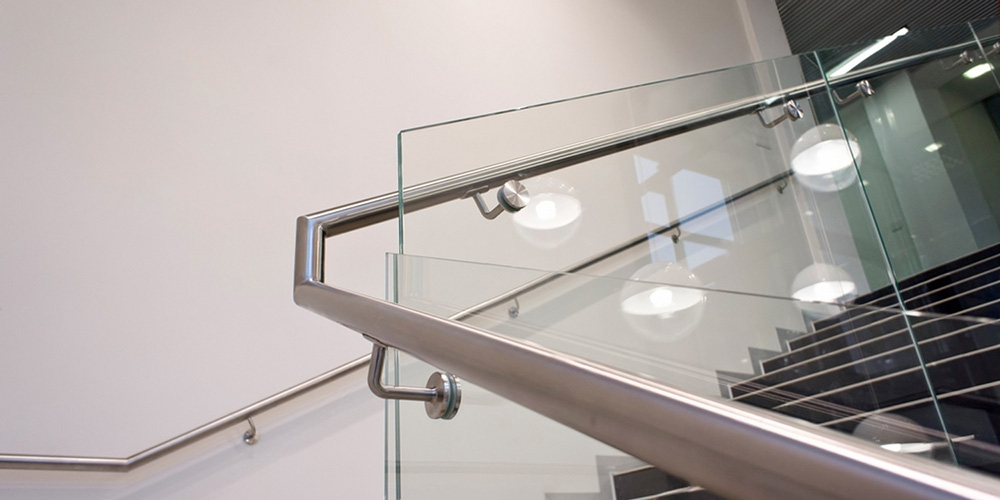
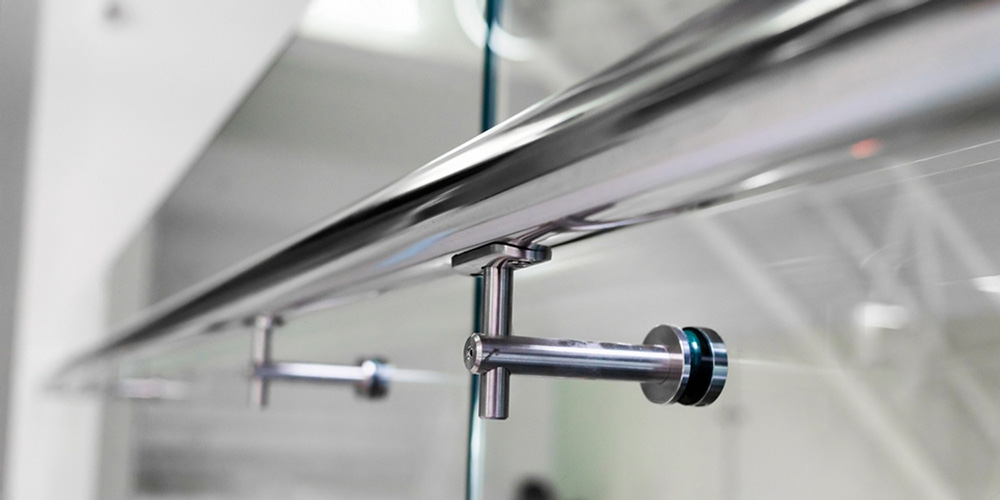
3. Glass-Mounted Stainless Steel Handrail Brackets
Glass‑mounted brackets are designed for glass balustrade systems where visual openness is a priority. These brackets must balance minimal visual impact with secure clamping or through‑glass fixing methods. Proper engineering ensures that handrails remain firmly supported without compromising glass integrity or safety performance.
Angle & Adjustability: Function of Stainless Steel Handrail Brackets
Adjustability defines how well brackets accommodate non‑standard installation conditions. Adjustable designs are intended to reduce on‑site measurement errors and installation rework rather than to serve purely aesthetic purposes.
1. Fixed Angle Stainless Steel Handrail Brackets
Fixed angle brackets are used for straight runs and standard angles such as 90 degrees. Their rigid design offers high stability and repeatability, making them suitable for projects with standardized layouts and consistent installation conditions.
2. Adjustable Stainless Steel Handrail Brackets
Adjustable brackets allow angle variation to accommodate stair slopes and irregular geometries. They are commonly specified for staircases and transitional sections where handrail angles change. By adapting to site conditions, adjustable brackets help contractors achieve accurate alignment while reducing installation adjustments.
3. Offset Stainless Steel Handrail Brackets
Offset brackets are designed to maintain the required clearance between the handrail and wall surface. In ADA‑regulated environments, this spacing is mandatory to ensure safe and comfortable grip access. Offset design is therefore a compliance requirement rather than a design option.
Key Applications for Premium Stainless Steel Handrail Brackets
In healthcare facilities, brackets must support frequent cleaning, strict hygiene protocols, and continuous daily use without loosening. In coastal or outdoor environments, corrosion resistance becomes the primary concern, making material grade selection critical. Public transportation hubs and infrastructure projects require brackets capable of handling high traffic loads, vibration, and long service intervals between maintenance inspections.
Specifying Your Stainless Steel Handrail Brackets: Grade & Design
Material selection directly affects bracket performance and lifespan. SS304 is commonly used for indoor and standard environments, offering a balance between durability and cost. SS316 provides enhanced corrosion resistance for coastal or high‑humidity conditions but should be specified based on actual exposure to avoid unnecessary cost increases. For more demanding environments, duplex stainless steel such as 2205 offers higher strength and improved resistance to stress corrosion cracking, making it suitable for heavy‑duty or marine‑adjacent applications. In extreme conditions, super duplex stainless steel 2507 provides even greater corrosion resistance and mechanical strength, supporting long‑term performance in highly aggressive environments. Load ratings, mounting hardware compatibility, and certification documentation are equally important during specification.
| Stainless Steel Grade | Corrosion Resistance | Mechanical Strength | Typical Application | Relative Cost Level |
| SS304 | Suitable for controlled indoor environments | Standard | Indoor corridors and stairwells | Standard |
| SS316 | Improved resistance for general outdoor use | Standard to moderate | General outdoor and humid environments | Higher |
| Duplex 2205 | High resistance to corrosion and stress corrosion cracking | High | Coastal and marine-adjacent applications | High |
| Super Duplex 2507 | Very high resistance in aggressive environments | Very high | Highly corrosive marine and industrial environments | Premium |
Step-by-Step Installation Guide for Stainless Steel Handrail Brackets
Professional installation begins with confirming bracket spacing, substrate strength, and anchor type selection during the design phase. Proper alignment, torque control, and secure fixing ensure that brackets maintain structural integrity throughout the system’s service life. These steps function as quality control checkpoints rather than installation instructions.
Long-Term Maintenance and Care for Stainless Steel Handrail Brackets
From a facility management perspective, routine inspection of bracket tightness and surface condition is essential. Tea staining or discoloration is typically related to environmental exposure and cleaning methods rather than material failure. Regular cleaning and periodic checks help maintain appearance and structural reliability over time.

ALLWIN Hardware Your Trusted B2B Partner for Premium Stainless Steel Handrail Brackets
ALLWIN supports B2B projects by supplying stainless steel handrail brackets with verified material grades, load documentation, and consistent specifications. Stable bulk supply and OEM/ODM capabilities allow customization of angles, bases, and finishes while maintaining system compatibility. This approach helps project teams reduce specification risks and streamline procurement.
Stainless Steel Handrail Brackets FAQs for Buyers
Q1: How is bracket spacing determined?
A1: Spacing depends on handrail load requirements, wall conditions, and applicable building codes.
Q2: When is SS316 required instead of SS304?
SS316 is generally suitable for standard outdoor applications, while more demanding coastal, marine, or high‑corrosion environments are better served by duplex grades such as 2205 or super duplex 2507, which provide higher strength and improved corrosion resistance.
Q3: Can different bracket types be mixed in one system?
A3: Mixing bracket types is possible but should be evaluated carefully to ensure consistent load transfer and compliance.
Conclusion
Stainless steel handrail brackets may be small components, but they carry significant structural responsibility. Proper selection, specification, and installation are essential for long‑term safety and compliance. Choosing a qualified supplier such as ALLWIN helps ensure that every bracket contributes reliably to overall system performance.
記事分類
最近の記事
- The Essential B2B Guide to Stainless Steel Handrail Brackets: Selection, Specification, and Design
- Premium Stainless Steel Handrails Durability, Design & B2B Compliance Guide
- Stainless Steel Railing: The Ultimate Guide to Hardware Design & B2B Solutions
- The Definitive Guide to Stainless Steel Manicure Scissors: Types, Materials, and B2B Quality
- Stainless Steel Nail Clipper: Complete Guide, Types, Care Tips, and Great B2B Solutions