
BLOG
- Dom
- Blog
- Dzielenie się branżą
- Glass Guardrail Design Starts with the Right Hardware
Glass Guardrail Design Starts with the Right Hardware
Oct 30, 2026
Autor : ALLWIN
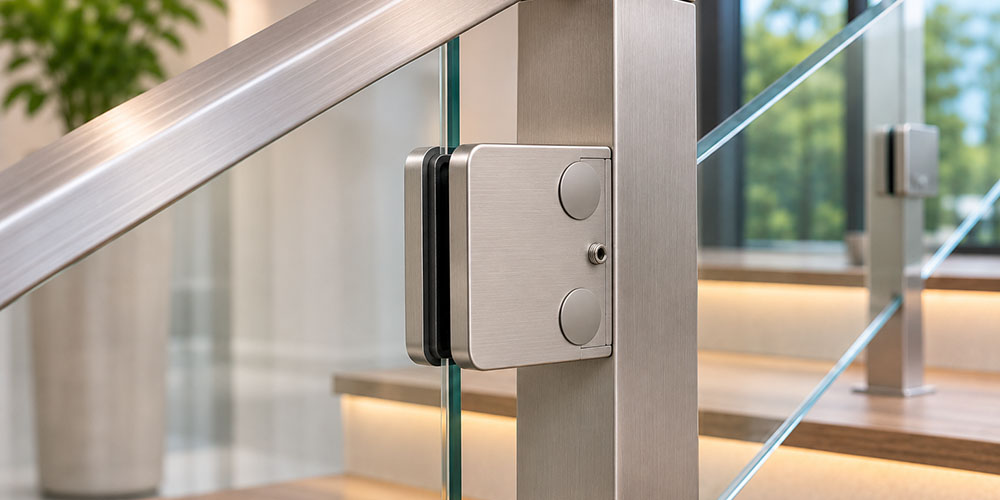
Glass guardrails are widely used in staircases, balconies, landings, and elevated interior spaces where maintaining an open view is part of the architectural design. Their transparent appearance allows natural light to pass through while creating a protective barrier along exposed edges. However, a glass guardrail requires more than the right glass panels. Supporting structures, glass clamps, connectors, and mounting hardware must work together to form a properly designed system.
Selecting these components starts with understanding how the glass panels will be supported and connected. Post-mounted clamps, base-mounted systems, and glass-to-glass connectors serve different purposes, while panel dimensions and installation conditions influence hardware compatibility. This guide introduces the main components of a glass guardrail, explains common mounting configurations, and explores ALLWIN glass clamp and connector options for different project requirements.
What Makes Up a Glass Guardrail?
A glass guardrail generally consists of glass panels, a primary supporting structure, mounting hardware, and, depending on the design, a top rail or cap rail. The supporting structure may include vertical posts, a continuous base shoe, individual glass supports, or an engineered side-mounted system. Glass clamps and other fittings secure the panels within the intended configuration, while connectors may be used between adjacent panels. Each component has a specific function, and the complete assembly must be designed to satisfy the applicable structural and safety requirements.
Some glass guardrails incorporate a top rail to provide a finished upper edge or serve a structural function within the approved system. However, a top rail is not necessarily the same as a graspable handrail. Stairways or other locations requiring a separate handrail may have additional specifications for gripping dimensions, position, and mounting height. Whether a glass guardrail requires a top rail, a separate handrail, or both depends on the system design and applicable local building requirements.
How Glass Guardrail Panels Are Secured?
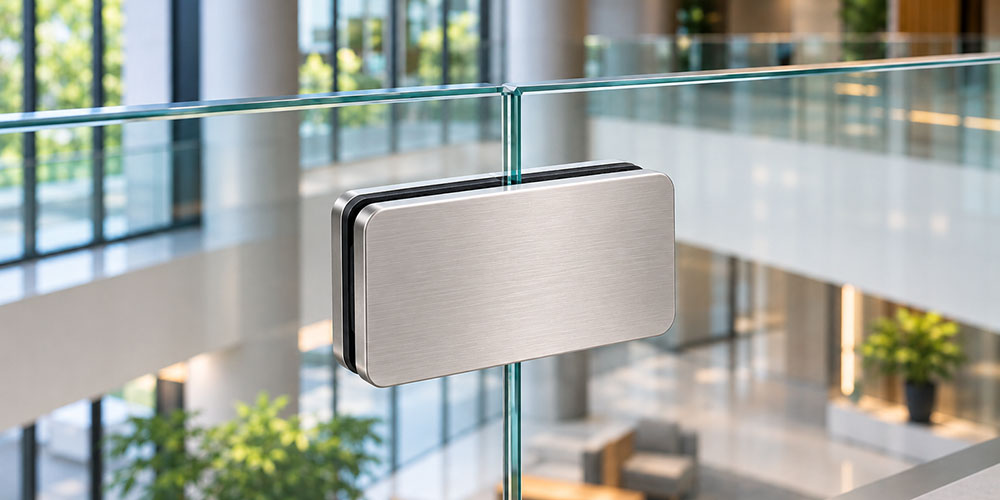
Glass guardrail panels can be supported using several mounting configurations. Post-mounted systems use clamps attached to vertical posts, while frameless designs may rely on base shoes, spigots, or side-mounted standoffs. These arrangements affect the overall appearance of the guardrail and determine how loads are transferred from the glass panels to the supporting structure.
Choosing a mounting method involves more than deciding between a framed and frameless appearance. The available floor or side structure, glass dimensions, fixing positions, and installation requirements must all be considered. Understanding the differences between mounting systems helps buyers identify which hardware components are relevant to their project before comparing individual products.
Post-Mounted Glass Clamps
Post-mounted glass clamps hold glass panels against vertical posts, creating a railing configuration in which the posts provide the primary structural support. Depending on the post design, clamps may have flat mounting backs for square posts or curved backs intended for round tubing. The clamp body, mounting arrangement, and gasket must be compatible with the selected glass and supporting post. Buyers should confirm glass thickness, applicable gasket specifications, mounting dimensions, and the required fixing method rather than selecting clamps based on their external shape alone.
Base Shoes, Spigots, and Standoffs
Base shoes, spigots, and standoffs support glass panels without relying on conventional vertical railing posts. A base shoe is a continuous channel installed along the lower edge of the glass, while spigots provide individual support points beneath the panel. Standoffs secure glass to an appropriately designed supporting structure from the side, creating a different visual arrangement. Each system has its own mounting and structural requirements, so the appropriate solution depends on the panel dimensions, substrate, fixing arrangement, and verified system design rather than appearance alone.
Glass-to-Glass Connectors
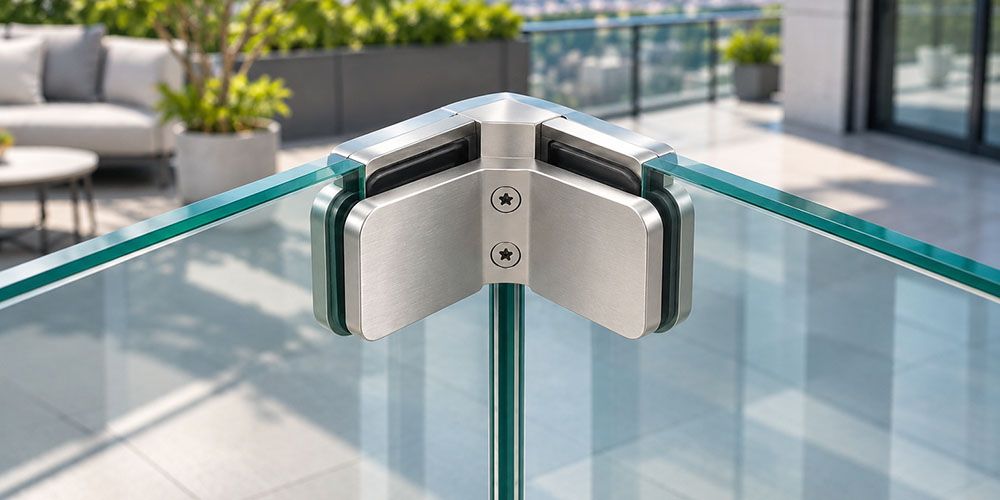
Glass-to-glass connectors join adjacent panels in straight, corner, or angled configurations. They help maintain the intended relationship between panels and can provide a coordinated appearance at glass joints. However, their structural role depends on the complete guardrail design. Connecting clamps should not automatically be treated as substitutes for the primary mounting and support system without appropriate engineering verification. Buyers should confirm the panel arrangement, glass thickness, connector position, and specified structural function before including these fittings in a glass guardrail assembly.
Glass Clamp Solutions for Guardrail Panels and Connections
Glass clamps and connectors are available in different configurations to accommodate panel holding, inline connections, and changes in direction. While these fittings may share similar stainless steel finishes, their intended functions are not interchangeable. A clamp designed to secure glass to a post serves a different purpose from a connector joining two adjacent panels.
serves a different purpose from a connector joining two adjacent panels. ALLWIN offers square glass clamps, 180-degree glass-to-glass connectors, and corner or adjustable connection fittings for different glass hardware applications. The following product groups illustrate how hardware can be selected according to its installation position and connection geometry. Suitability for a particular guardrail must still be confirmed against the product specifications and the requirements of the complete system.
Square Glass Clamps
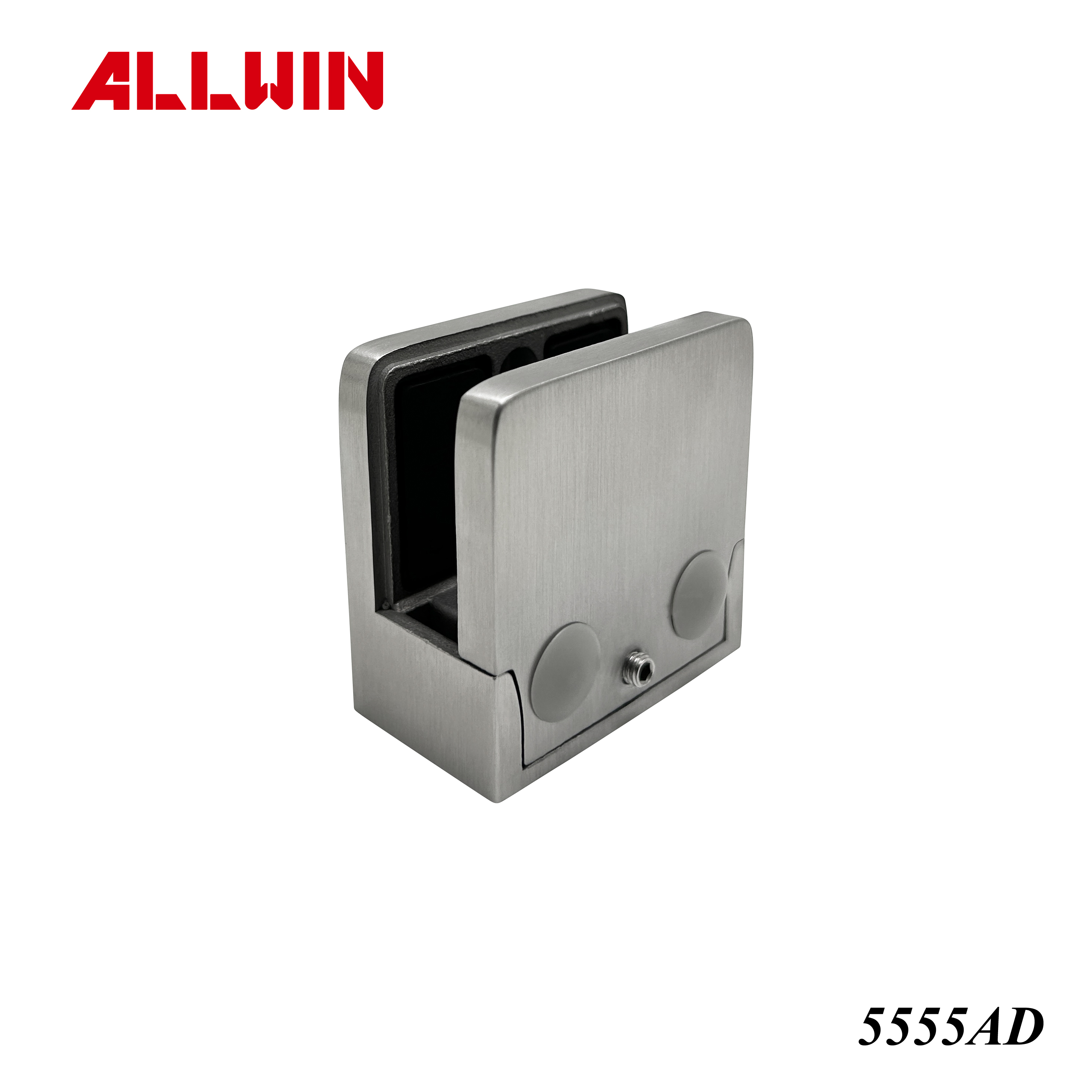
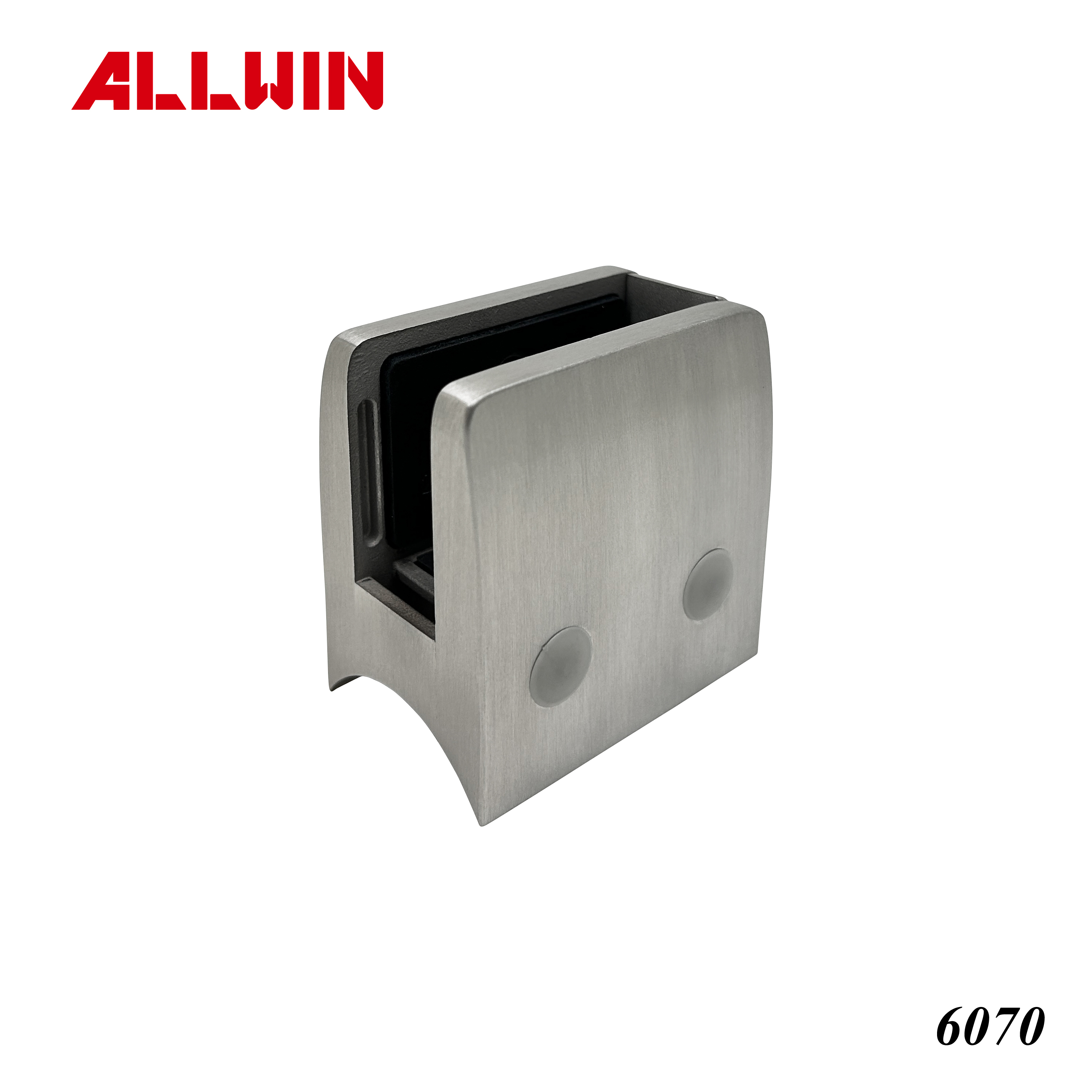
Square glass clamps provide a compact fitting option for securing glass panels to a designated supporting structure. ALLWIN models 6070 and 5555AD offer different square clamp configurations, allowing buyers to compare body dimensions, mounting arrangements, and design features. The 5555AD includes an adjustable design that can be considered where its specified adjustment function is required. Finish selection can also help coordinate the clamps with surrounding posts and architectural hardware. Before specifying either model, buyers should check the applicable glass thickness, gasket arrangement, fixing location, and technical drawings to confirm compatibility with the intended assembly.
180-Degree Glass-to-Glass Connectors
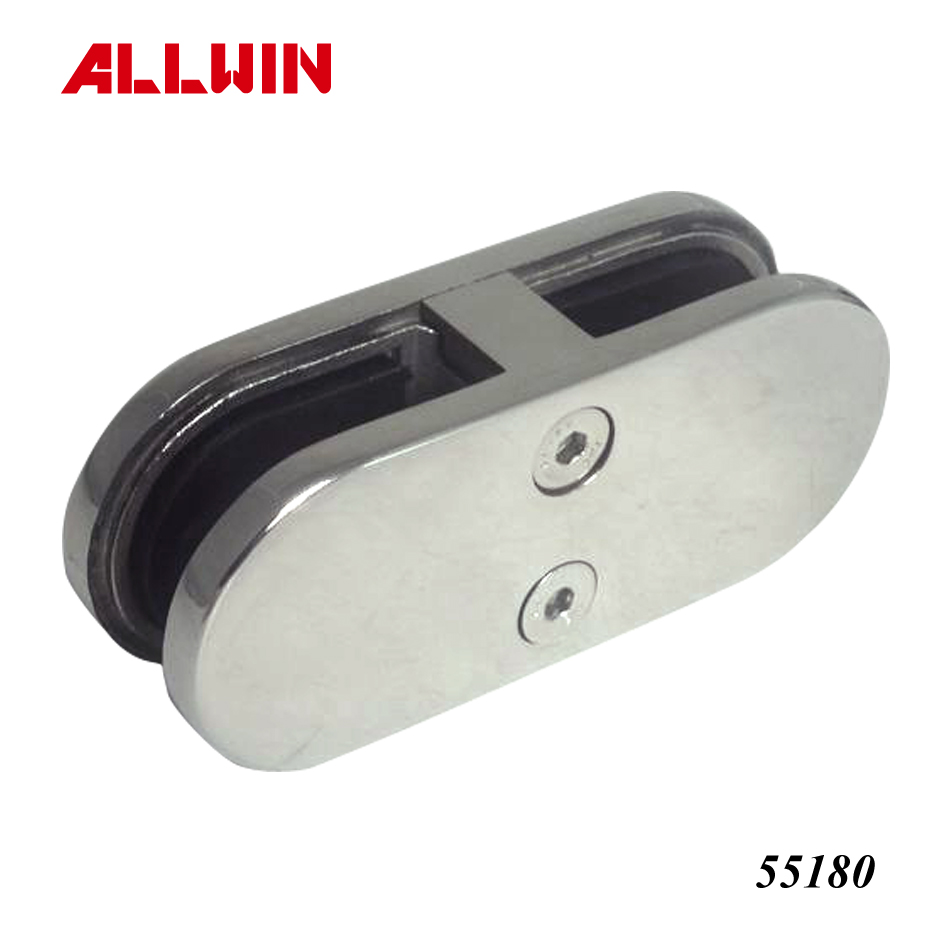
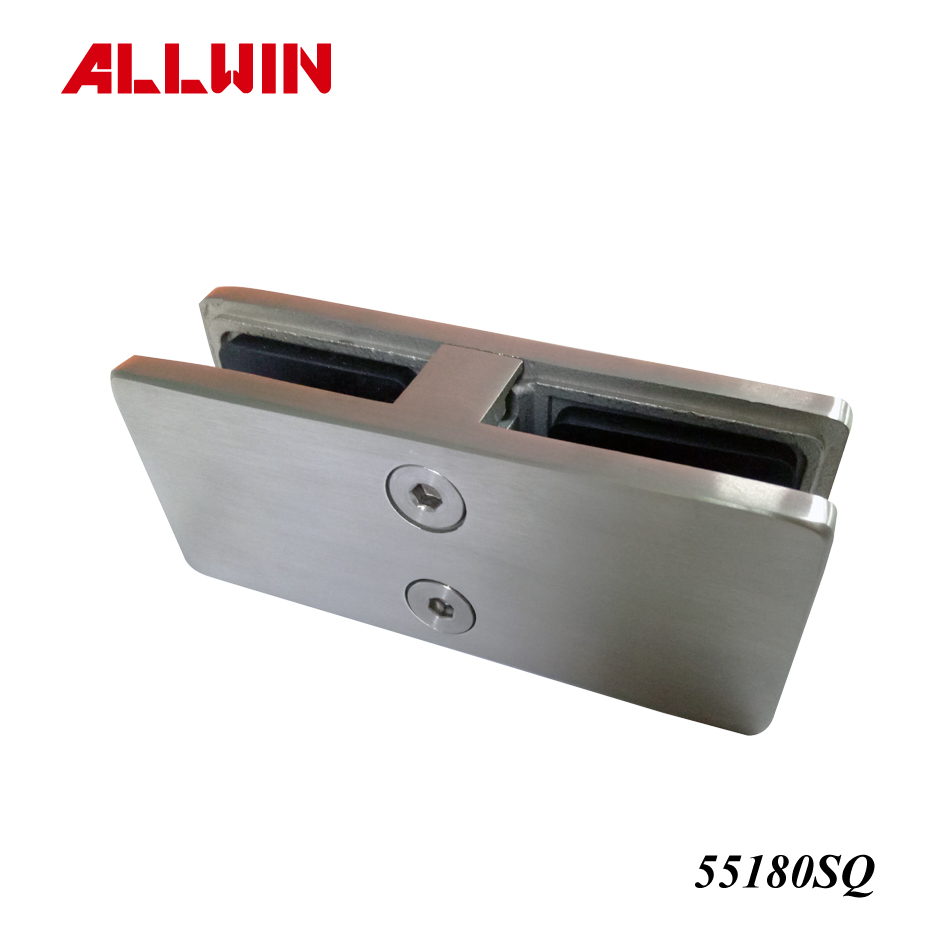
A 180-degree glass-to-glass connector is used where adjacent glass panels are arranged in a straight line. This configuration can help maintain an aligned connection between neighboring panels without introducing a change in direction. ALLWIN models 55180, 55180SQ, and 1495 provide connector options with different body designs and dimensions for inline glass arrangements. Buyers can compare these fittings according to the desired appearance, glass joint location, and mounting requirements. The glass thickness, panel spacing, and connector installation details should be confirmed before selection, particularly where the fitting forms part of a larger guardrail system.
Corner and Adjustable Glass Connectors
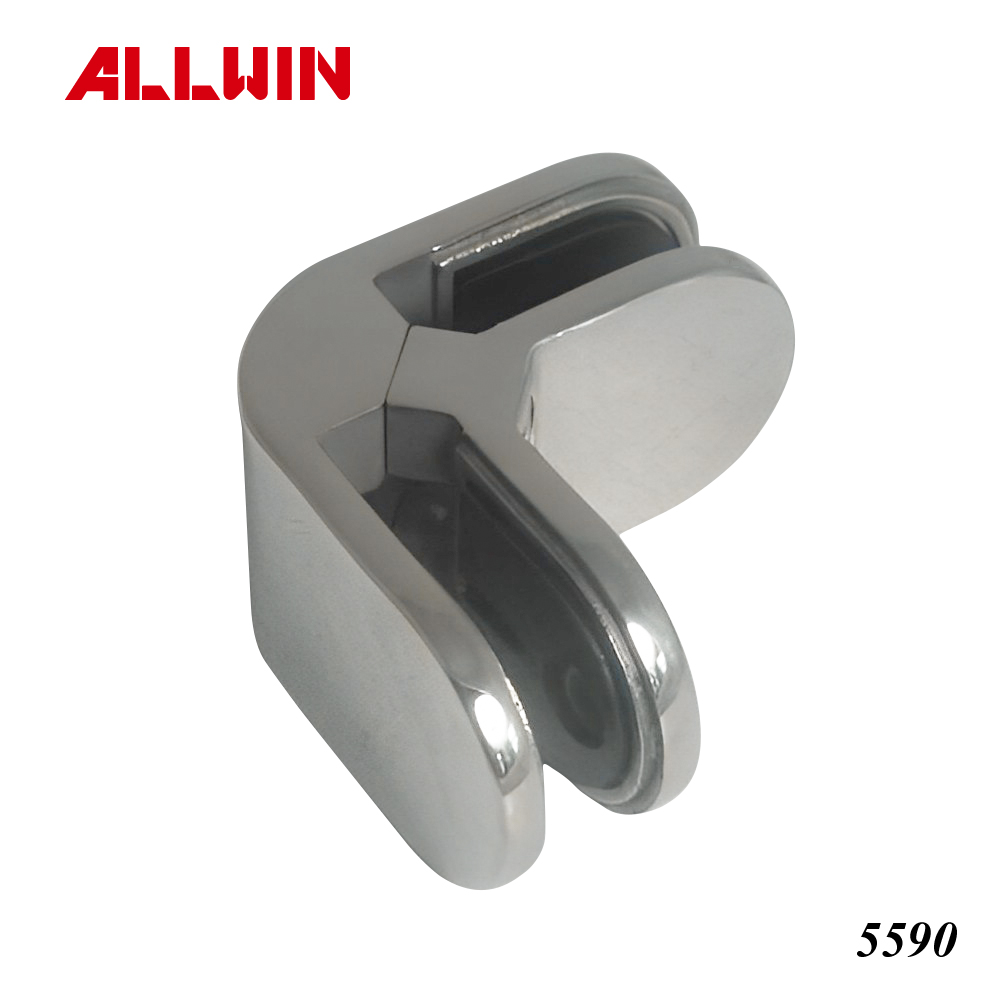
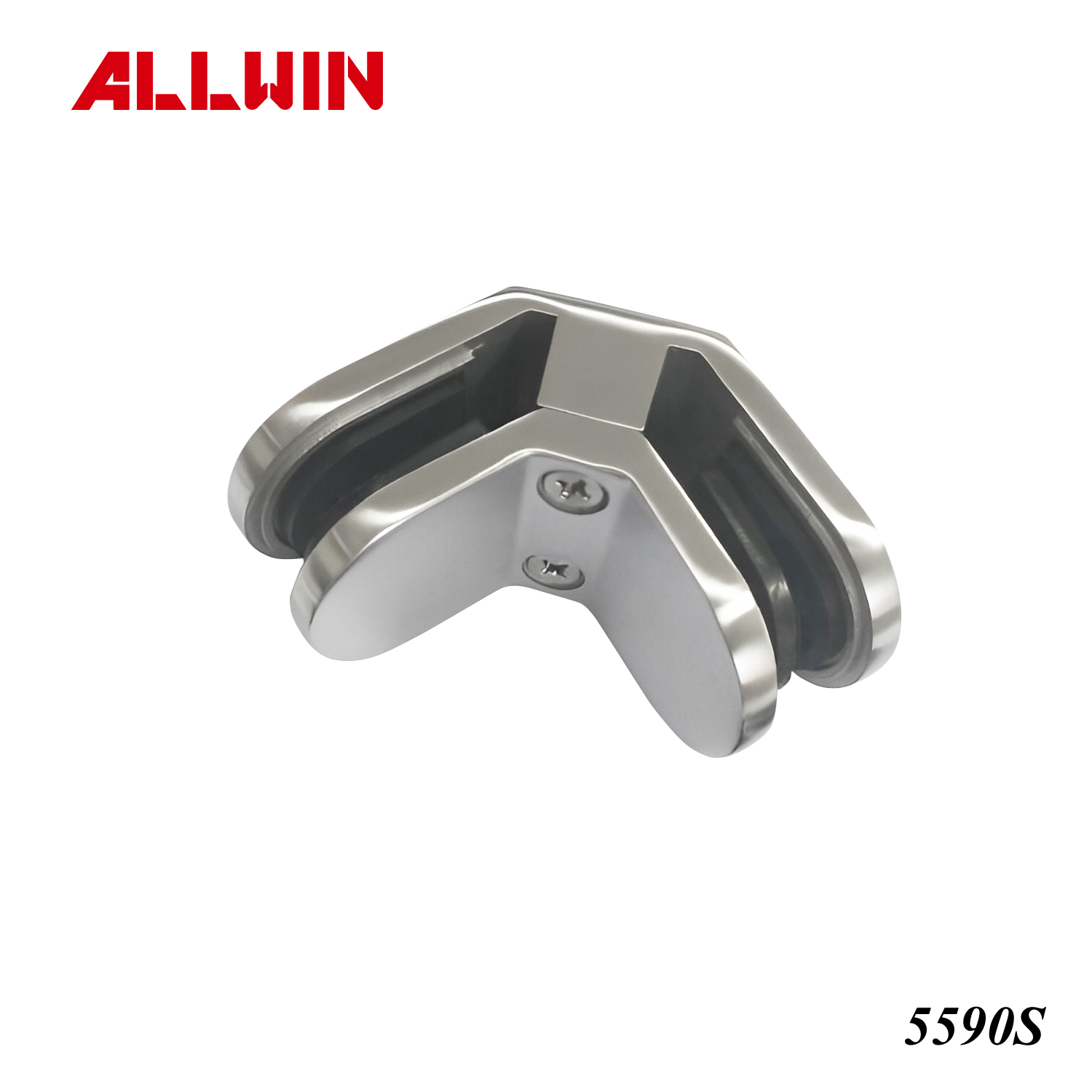
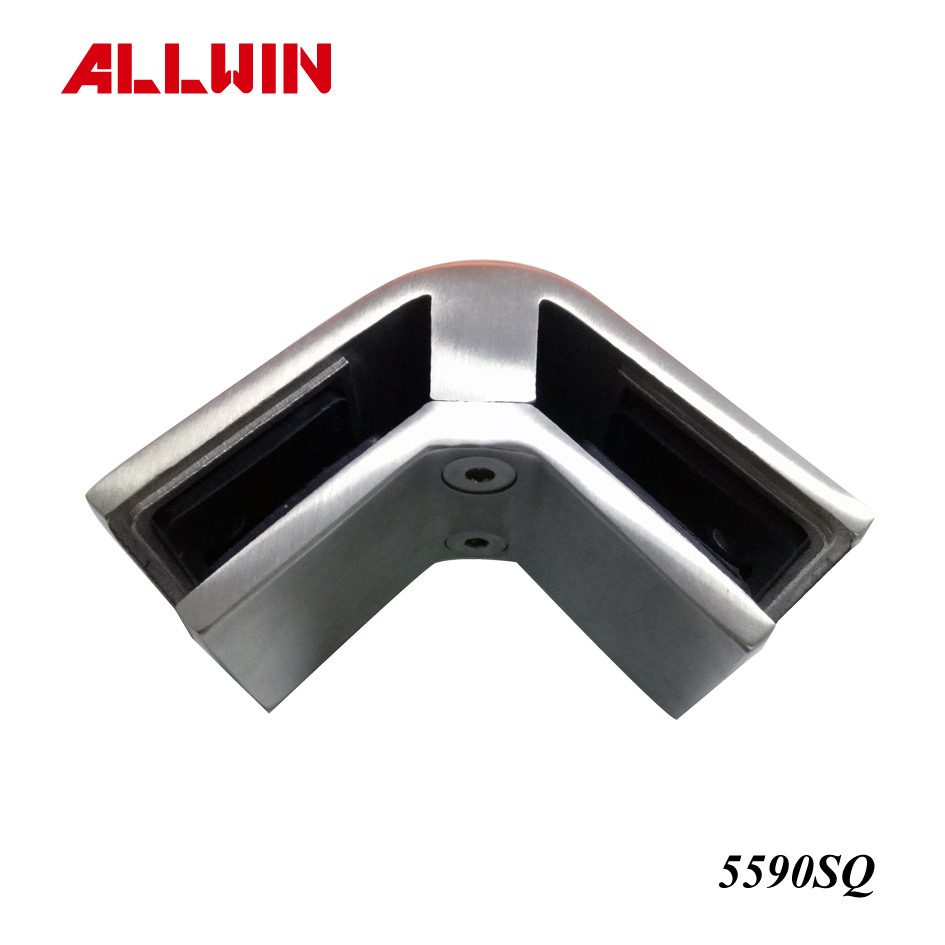
Corner glass connectors accommodate changes in direction between adjacent panels. ALLWIN 5590S provides a fixed 90-degree connection option for right-angle glass configurations, while 1521 features an adjustable swivel design for applications requiring a different connection angle. Fixed connectors are suitable where the panel geometry has already been established, whereas adjustable fittings provide flexibility within their specified adjustment range. Buyers should confirm the required corner angle, glass thickness, connector orientation, and installation dimensions to ensure the selected fitting matches the planned glass arrangement.
Choosing Hardware for Your Glass Guardrail
Selecting glass guardrail hardware requires evaluating the panels, mounting arrangement, and installation environment together. Although two clamps may appear similar, their compatible glass thicknesses, gasket requirements, mounting methods, and intended applications may differ. A fitting that accommodates a particular glass thickness is not automatically approved for every guardrail installation using that thickness.
For B2B buyers and project contractors, technical drawings and installation details are particularly important when comparing hardware options. Confirming these specifications before ordering helps identify suitable products and reduces the likelihood of mismatched components during installation. The material and surface finish should also be selected according to the environment in which the guardrail will be used.
Matching Glass Guardrail Hardware to the Panels
Start by confirming the glass type, thickness, panel dimensions, and any required holes or cutouts. The selected hardware must match the glass edge or drilled-hole configuration, while gaskets and contact surfaces must be suitable for the panel and fitting design. Buyers should also verify the mounting substrate, fixing method, panel spacing, and applicable structural load requirements. Laminated or tempered glass specifications should follow the approved system design and relevant local regulations. Glass thickness compatibility alone does not establish whether a clamp or connector is suitable for the overall guardrail assembly.
Glass Guardrail Hardware for Indoor and Outdoor Use
Indoor and outdoor glass guardrails are exposed to different environmental conditions, which can influence material and finish selection. Interior installations may prioritize appearance and coordination with surrounding hardware, while outdoor applications must also account for rain, humidity, pollution, and potential chloride exposure. Stainless steel grades such as 304 and 316 are commonly considered for architectural hardware, with 316 generally offering greater resistance in more demanding chloride-exposed environments. Buyers should verify the material grade, surface treatment, maintenance recommendations, and compatibility of fasteners and adjacent components according to the actual project conditions.
Complete Your Glass Guardrail Project with ALLWIN Hardware
A successful glass guardrail project begins with matching the hardware to the complete panel and support configuration. The glass type, dimensions, fixing locations, mounting method, and connection angles should be reviewed together with the intended installation environment. Post-mounted clamps, inline connectors, and corner fittings serve different purposes, so each product must be selected according to its role within the approved guardrail design.
ALLWIN offers glass clamps and glass-to-glass connectors in different configurations, dimensions, and surface finishes for architectural glass applications. Buyers can explore square glass clamps, 180-degree connectors, and fixed or adjustable corner fittings according to their project requirements. For further product evaluation, provide glass specifications, layout drawings, mounting details, preferred finishes, and required quantities. Contact ALLWIN to discuss available glass hardware options, product specifications, and OEM or ODM requirements for your project.
ALLWIN
Firma ALLWIN z siedzibą na Tajwanie to wiodący producent specjalizujący się w wysokiej jakości okuciach architektonicznych. Dzięki ponad 25-letniemu doświadczeniu w branży, posiadamy własną fabrykę, w której stosujemy zaawansowane odlewy i obróbkę CNC. Oferujemy rozwiązania dostosowane do indywidualnych potrzeb w zakresie systemów balustrad i okuć drzwiowych. Łącząc rygorystyczne testy z uczciwą obsługą, budujemy solidne, długoterminowe partnerstwa z klientami na całym świecie.