
BLOG
- Hogar
- Blog
- Compartir industria
- Which Stair Handrail Fittings Do You Need?
Which Stair Handrail Fittings Do You Need?
Oct 02, 2026
Autor : ALLWIN
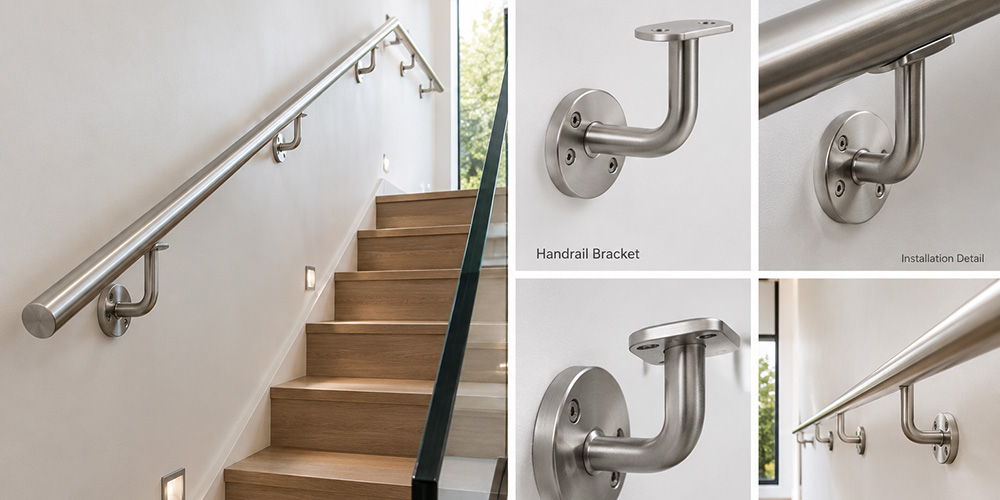
Choosing the right stair handrail fittings involves more than selecting hardware that matches the appearance of a railing. Brackets, supports, connectors, elbows, and end fittings each serve a different purpose, helping secure the handrail, accommodate changes in direction, and complete the installation. Whether planning a new staircase or replacing existing components, understanding these fittings can help buyers avoid compatibility issues and unnecessary installation adjustments.
Before selecting individual parts, identify the handrail profile, tube dimensions, installation layout, and required support positions. Straight stairways, sloped sections, corners, and landings may require different combinations of fittings. This guide explains where common stair handrail fittings are used, compares ALLWIN handrail support options, and outlines the key specifications to confirm for residential and commercial projects.
Where Stair Handrail Fittings Are Used?
A stair handrail system typically requires several types of fittings to support the rail along its entire length. Brackets and supports secure the handrail to walls, posts, or other suitable mounting structures. Connectors and elbows join rail sections or accommodate changes in direction, while end caps and wall returns complete the exposed ends of the handrail.
The required combination depends on the staircase layout. A straight handrail may need support brackets and end fittings, while a staircase with intermediate landings or changes in slope may also require angled connectors and different support configurations. Identifying these functions before purchasing helps ensure that each fitting matches both the handrail dimensions and its intended installation position.
Brackets and Supports
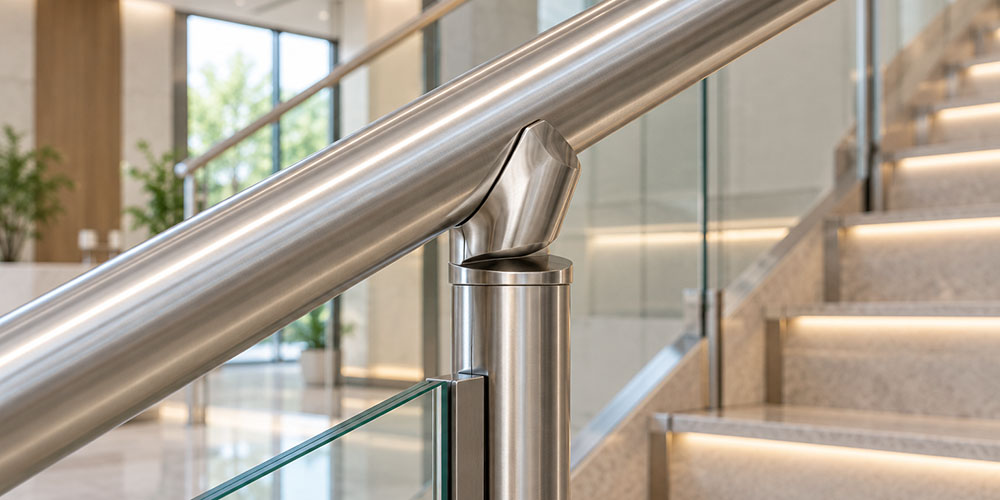
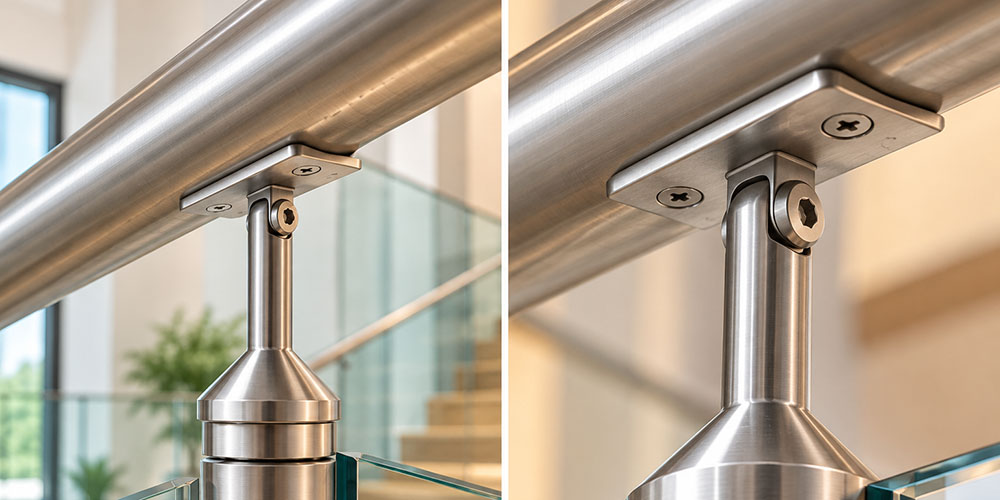
Handrail brackets and supports connect the handrail to a wall, structural post, or an appropriately engineered glass-mounted assembly. Wall-mounted brackets support handrails along stairways and corridors, while post-mounted saddle supports provide a contact surface between the rail and its supporting post. Fixed supports are useful where the mounting geometry is already established, whereas adjustable supports can accommodate different rail slopes or mounting angles. Buyers should confirm the handrail profile, saddle contact surface, mounting arrangement, and required support capacity before selecting a bracket.
Connectors and Elbows
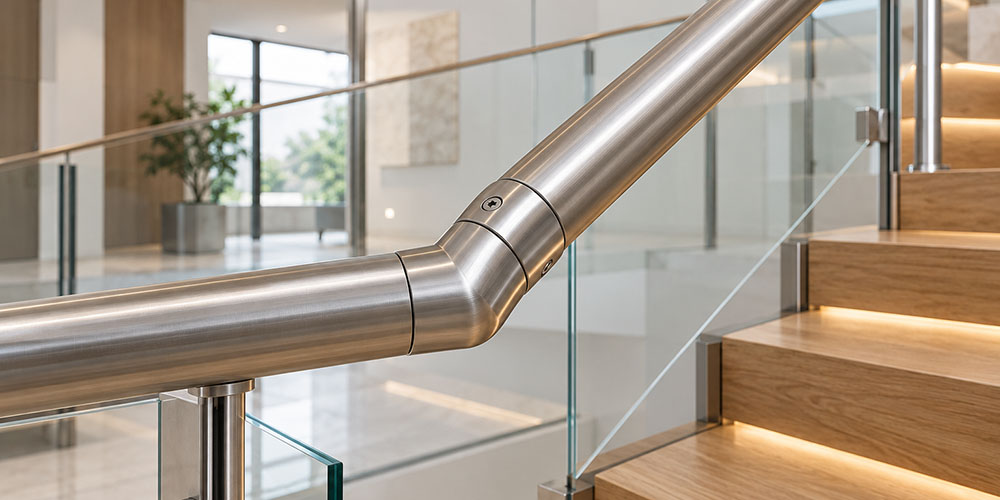
Handrail connectors join separate rail sections to create a continuous railing layout. Straight connectors are commonly used to extend a handrail along the same direction, while elbows accommodate changes in direction at corners, landings, or transitions between sloped and horizontal sections. Fixed-angle elbows work well when the required geometry is known, while adjustable connectors provide flexibility for less conventional layouts. Selection should be based on the actual connection angle, tube diameter, wall thickness, and joining method rather than the external appearance of the fitting.
End Caps and Wall Returns
End caps close exposed handrail tube ends, providing a finished appearance and covering sharp or unfinished edges. They are available in different shapes and finishes to coordinate with the surrounding railing hardware. Wall returns serve a different purpose by directing the handrail end back toward the wall, creating a returned termination instead of an exposed rail end. Because these fittings perform different functions, an end cap should not automatically be treated as a substitute for a wall return. Buyers should confirm the intended termination design and any applicable local requirements.
Handrail Support Options for Different Stair Configurations
Once the required brackets, connectors, and end fittings have been identified, the next step is to select handrail supports that match the railing configuration. Support saddles must fit the handrail profile and installation angle, particularly where stair slopes and landing sections require different mounting positions. The following ALLWIN options focus on round, square, and angled handrail support applications.
Support selection should begin with the rail profile and mounting position. Round tube supports use curved saddles, while square tube brackets provide contact surfaces suited to square profiles. Adjustable and fixed-angle supports address different installation geometries. Comparing these features helps buyers identify suitable hardware before confirming dimensions, material grades, finishes, and installation requirements.
Adjustable Round Tube Supports
Adjustable round tube supports are designed for handrails with circular profiles, providing a curved saddle that follows the outside of the tube. ALLWIN models 5013R and 5015 offer adjustable saddle support options for round tubes, including common diameters such as 38.1 mm (1.5 inches) and 50.8 mm (2 inches), subject to the selected model. These products can be considered for stair slopes and railing arrangements where the support orientation must match the installed handrail. Buyers should compare the saddle design, compatible tube diameter, adjustment range, and technical drawings before choosing a model.
Square Saddle Brackets
Square saddle brackets provide a contact surface suited to square handrail profiles, making them appropriate for modern railing designs using straight-edged tubing. ALLWIN 50325 and 50325AD offer square tube support options, with the 50325AD featuring an adjustable saddle design for 40 × 40 mm square tubing. Buyers can compare fixed and adjustable configurations according to the required mounting angle and installation layout. Available finish directions include brushed stainless steel, polished stainless steel, and matte black, depending on the model. The final selection should match the tube profile, dimensions, mounting arrangement, and surrounding hardware finish.
Adjustable and Fixed-Angle Handrail Supports
Angled stair sections and changes in railing direction may require supports with a specific saddle orientation. ALLWIN 5016 features an adjustable corner saddle for round handrail configurations, making it useful when the required support angle must be matched during installation. In comparison, 5017 uses a fixed 135° design suited to layouts where that support geometry has already been established. An adjustable support offers positioning flexibility, while a fixed-angle model provides a predetermined configuration. Buyers should verify the actual angle, orientation, compatible tube diameter, and mounting position against the product drawings before specifying either option.
Choosing Stair Handrail Fittings for Your Project
Selecting stair handrail fittings requires checking how each component works with the complete railing installation. The correct fitting must match the rail profile and dimensions while also accommodating the mounting surface, staircase geometry, and intended use. Similar-looking brackets or connectors may have different fixing methods, contact surfaces, or dimensional requirements, so appearance alone is not a reliable basis for selection.
For new projects, buyers should review drawings and confirm the required hardware before ordering. For replacement projects, the existing components and installation conditions become equally important. Material grade, finish, environmental exposure, and the availability of matching hardware should also be considered, particularly for projects requiring consistent specifications across multiple installations.
Matching Fittings to Your Existing Handrail
When replacing or adding handrail fittings, start by identifying the existing rail profile, outside diameter or square dimensions, tube wall thickness, saddle contact surface, and mounting-hole arrangement. These details help determine whether a new component can connect properly without modifying the existing system. Fittings from different manufacturers may use similar product descriptions but different dimensions, attachment methods, or mounting positions. Buyers should therefore compare technical drawings and actual measurements rather than assuming that visually similar components are interchangeable. The mounting substrate, fixing method, support spacing, and applicable load requirements must also be verified, since a fitting that matches the tube dimensions may still be unsuitable for the supporting structure.
Handrail Fittings for Outdoor Stairs
Outdoor stair handrail fittings must be selected with environmental exposure in mind. Rain, humidity, coastal salt, and cleaning conditions can influence material and finish performance over time. Stainless steel is commonly used for outdoor handrail components, with grades such as 304 and 316 offering different levels of corrosion resistance. Grade 316 is often preferred for more demanding coastal or chloride-exposed environments, although suitability still depends on the installation conditions and maintenance practices. Buyers should confirm the material grade, surface finish, and cleaning requirements while ensuring that fittings, fasteners, and handrail tubing are compatible with the intended environment.
Find the Right Handrail Supports from ALLWIN
The right stair handrail fittings should be selected according to the complete railing configuration. Brackets provide support, connectors accommodate rail transitions, and end fittings complete the handrail termination. Before placing an order, buyers should confirm the handrail profile, dimensions, mounting conditions, required angles, material specifications, and applicable load requirements. Matching these details across the railing system helps reduce installation conflicts and supports consistent project specifications.
ALLWIN offers stainless steel handrail support and saddle stem options for round tubes, square profiles, and angled stair configurations. The range includes adjustable round saddles, square saddle brackets, and fixed-angle supports, with different sizes, stainless steel grades, and surface finishes available by model. For residential, hotel, and commercial projects, buyers can provide handrail drawings, tube dimensions, mounting requirements, preferred finishes, and quantities to identify suitable products. Contact ALLWIN to discuss handrail support specifications, available options, and OEM or ODM requirements for your project.
ALLWIN
Con sede en Taiwán, ALLWIN es un fabricante líder especializado en herrajes arquitectónicos de alta calidad. Con más de 25 años de experiencia en el sector, contamos con una fábrica a gran escala equipada con tecnología avanzada de fundición y mecanizado CNC. Ofrecemos soluciones personalizadas para sistemas de barandillas y herrajes para puertas. Gracias a una combinación de rigurosas pruebas y un servicio honesto, forjamos relaciones de colaboración duraderas y de confianza con clientes de todo el mundo.