
Ratgeber
- Heim
- Der Blog
- Branchenaustausch
- Frameless Glass Railing: How the Glass Stays in Place
Frameless Glass Railing: How the Glass Stays in Place
Oct 16, 2026
Autor : ALLWIN
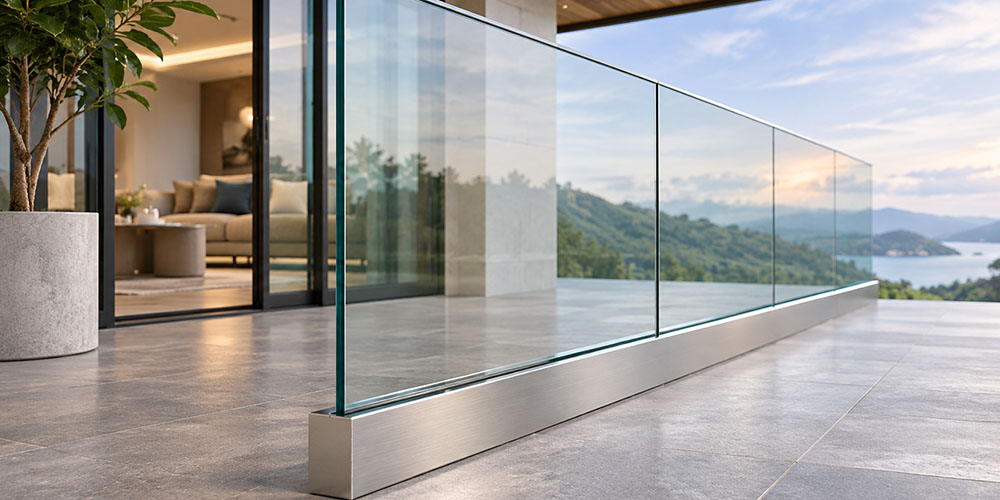
Frameless glass railings create an open, modern appearance by removing the traditional posts and frames that interrupt the view. They are commonly used along staircases, balconies, terraces, and elevated interior spaces where transparency is an important part of the architectural design. Although the glass panels may appear to stand independently, they rely on carefully selected mounting hardware and supporting structures to remain securely positioned.
Understanding how frameless glass railings hold the glass is essential when comparing different systems. Continuous base shoes, individual glass spigots, and side-mounted standoffs provide different support configurations, each with its own installation requirements. This guide explains these mounting methods, introduces ALLWIN base shoe and glass edge finishing options, and outlines the key specifications buyers should confirm before selecting hardware.
What Is a Frameless Glass Railing?
A frameless glass railing is a railing system designed without conventional vertical posts or a complete frame surrounding each glass panel. Instead, the glass is supported through specialized mounting hardware installed along its lower edge or at designated fixing points. This creates a clean architectural appearance while allowing the glass panels to remain the main visible element of the railing.
However, frameless does not mean hardware-free. Base shoes, spigots, standoffs, anchors, and internal retention components all contribute to the installation. Some systems also require a top rail or cap rail, depending on the approved design and applicable building requirements. Buyers should therefore evaluate the complete supporting system rather than selecting the glass panels and visible fittings separately.
How Frameless Glass Railing Systems Hold the Glass?
Frameless glass railing systems generally use three common mounting approaches: continuous base shoes, individual spigots, and point-supported standoffs. These configurations differ primarily in where the glass is supported and how the mounting hardware connects to the building structure. Each approach also creates a different visual effect, ranging from a continuous bottom channel to individual support points.
The appropriate mounting method depends on the available structure, glass dimensions, installation position, and required railing performance. A system with a continuous channel may be suitable where the glass can be supported along its lower edge, while individual supports or side-mounted fittings may accommodate other architectural layouts. Understanding these differences helps buyers determine which hardware configuration should be evaluated for their project.
Base Shoe Glass Railing Systems
Base shoe systems use a continuous metal channel installed along the lower edge of the glass railing. The glass panels are positioned inside the channel and secured using compatible internal retention components, such as wedges, gaskets, or other specified fixing mechanisms. Base shoes can be installed above the finished surface or incorporated into a recessed mounting arrangement, depending on the supporting structure and approved design. Exposed channels create a visible metal base, while recessed installations can provide a cleaner transition between the glass and surrounding floor. Buyers should consider channel dimensions, glass compatibility, and available mounting space when comparing these systems.
Spigot-Mounted Frameless Glass Railings
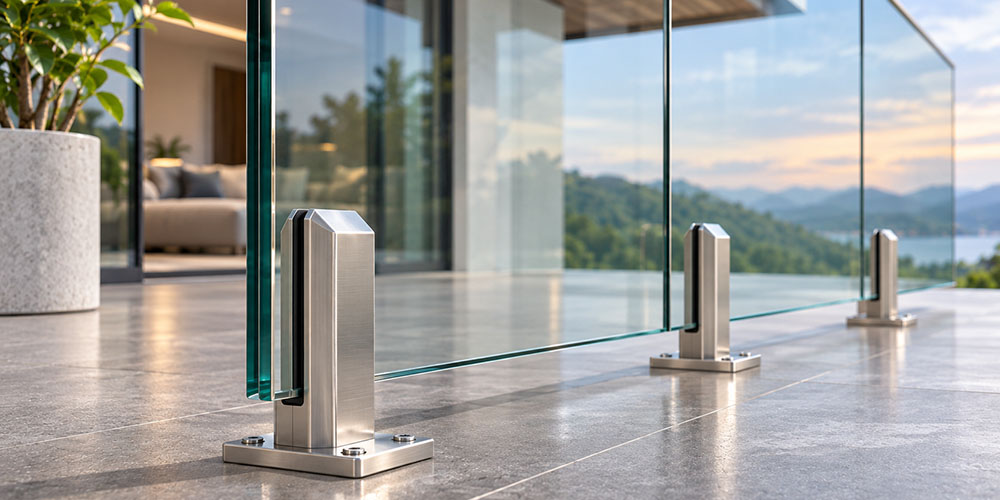
Spigot-mounted systems use individual glass supports positioned at designated locations beneath the panels rather than a continuous base channel. These fittings create visible support points along the lower edge while leaving more of the glass unobstructed between them. Spigot placement, panel dimensions, bottom clearance, and the supporting surface must be coordinated during system design. Different spigot models may use different glass retention methods and mounting arrangements, so they should not be treated as interchangeable based on appearance alone. Buyers should verify each product's specifications and suitability for the approved railing configuration.
Standoff-Mounted Frameless Glass Railings
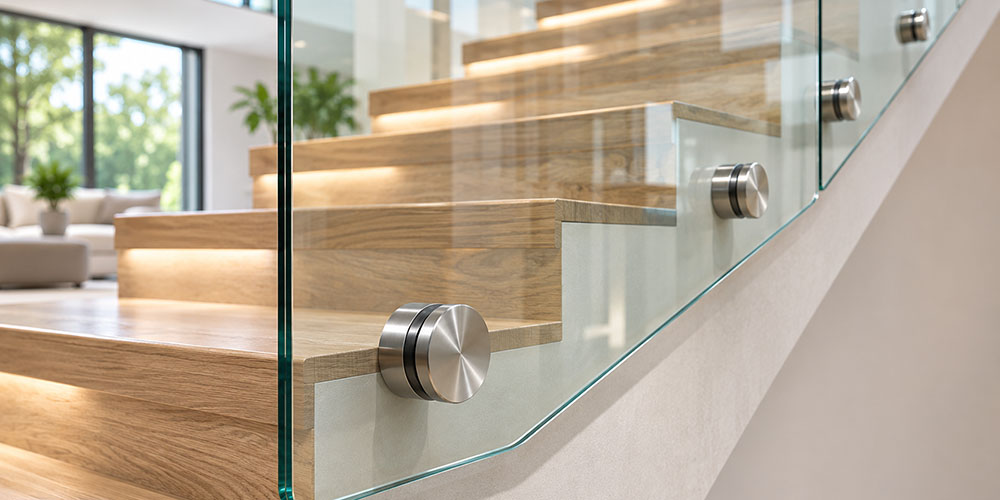
Standoff-mounted systems secure glass panels to the side of a staircase, floor slab, or another suitable structural surface using individual point-support fittings. These standoffs typically connect through prepared holes in the glass, positioning the panels at a specified distance from the supporting structure. This arrangement can reduce the amount of mounting hardware visible on the upper floor surface. However, the glass-hole layout, standoff projection, anchor locations, and supporting substrate must be established before fabrication. Because the mounting forces are transferred through individual fixing points, the complete system requires appropriate structural verification.
Base Shoe Options for Frameless Glass Railing
Frameless glass railing systems may use different base shoe profiles and glass edge finishing components according to the installation layout. Standard, low-profile, and heavy-duty channels offer different dimensions and mounting appearances, while glass composition affects the required channel and internal fixing components. Cap rails and U channels provide additional options for finishing exposed glass edges, although their structural function must be verified separately within the complete railing system.
ALLWIN offers aluminum base shoes and glass edge finishing profiles in different configurations for architectural glass applications. Buyers can compare channel profiles, glass compatibility, available lengths, and surface finishes when narrowing their options. The following products illustrate the differences between base shoe designs and related finishing components.
Standard, Low-Profile, and Heavy-Duty Base Shoes
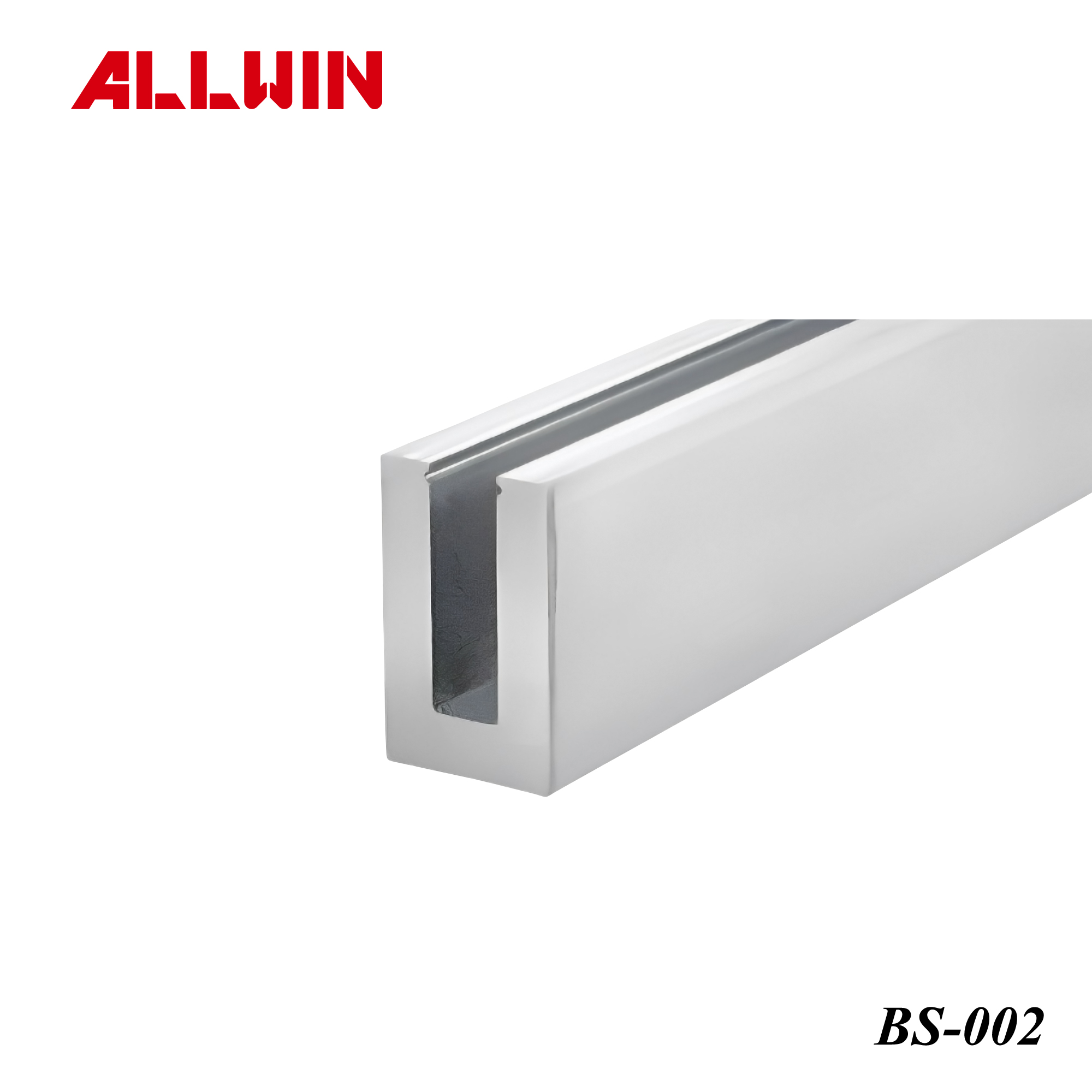
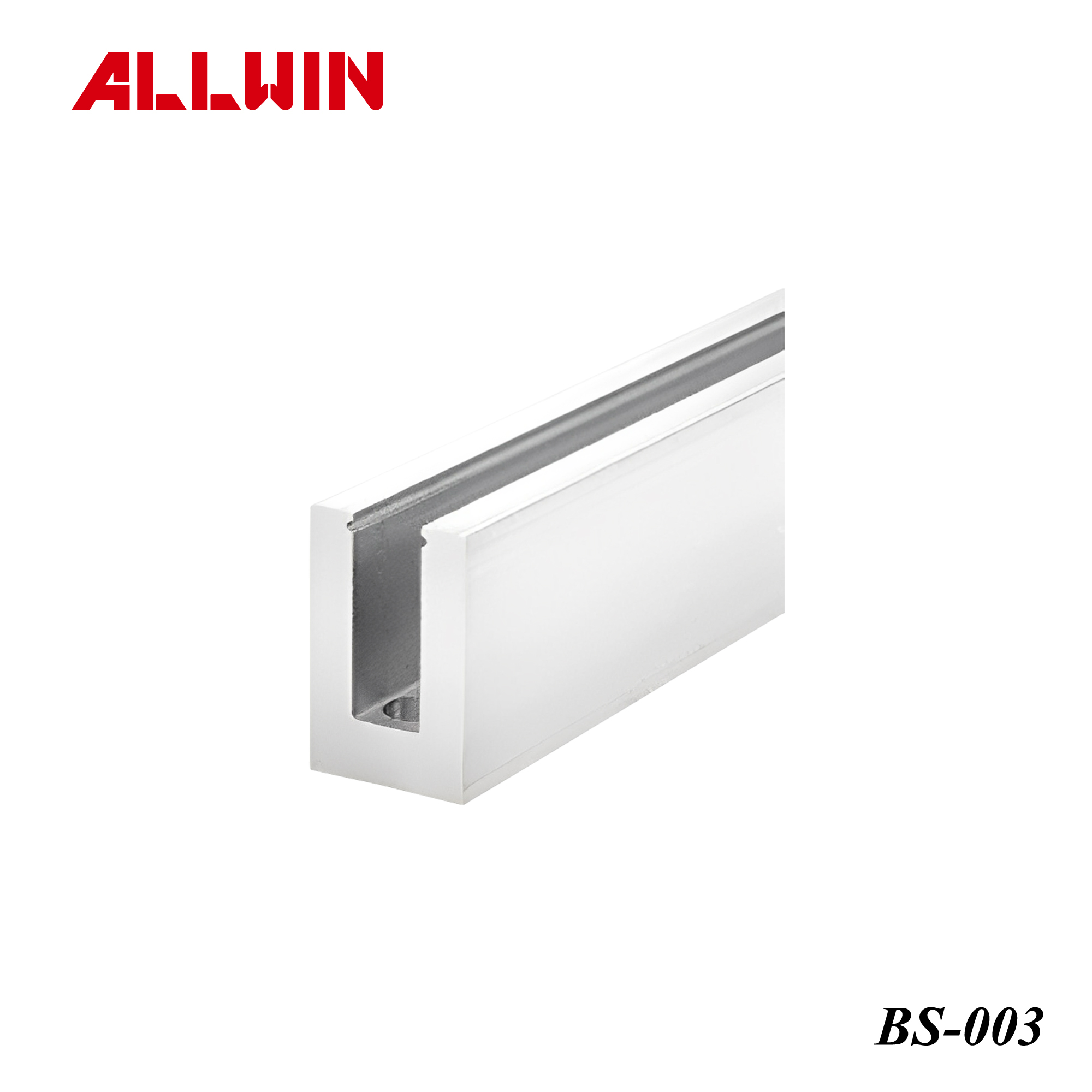
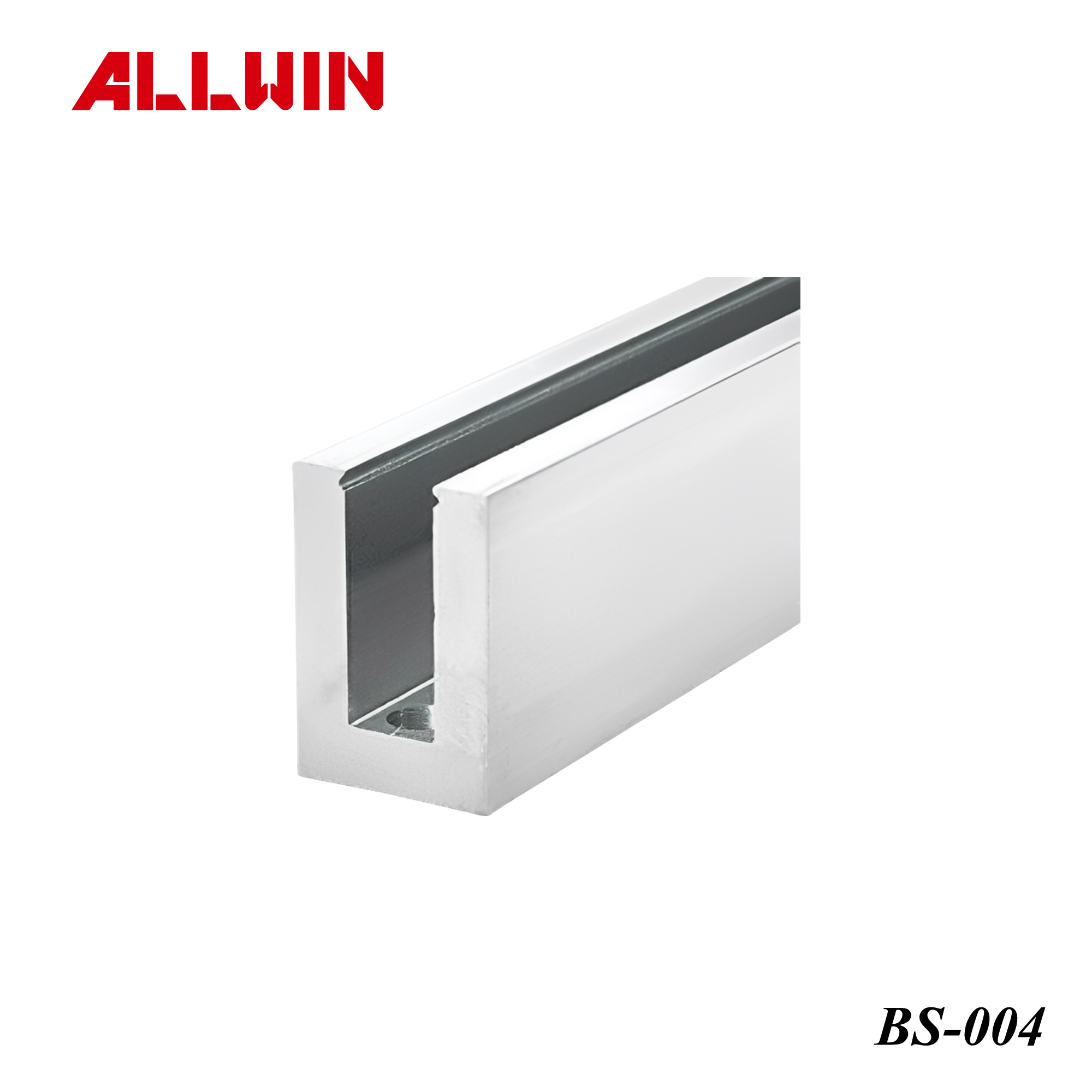
Standard, Low-Profile, and Heavy-Duty Base Shoes Base shoes are available in different profiles to accommodate architectural appearance and installation space. ALLWIN BS-002 is a standard square aluminum base shoe, while BS-003 provides a low-profile square design with a reduced visual presence. BS-004 is categorized as a heavy-duty square base shoe, offering another profile option for comparison. These products allow buyers to evaluate channel dimensions, exposed height, and mounting requirements according to the railing layout. However, terms such as Low Profile or Heavy Duty describe product configurations and should not be used alone to determine structural load capacity. The selected base shoe must be evaluated as part of the complete approved railing system.
Base Shoes for Monolithic and Laminated Glass
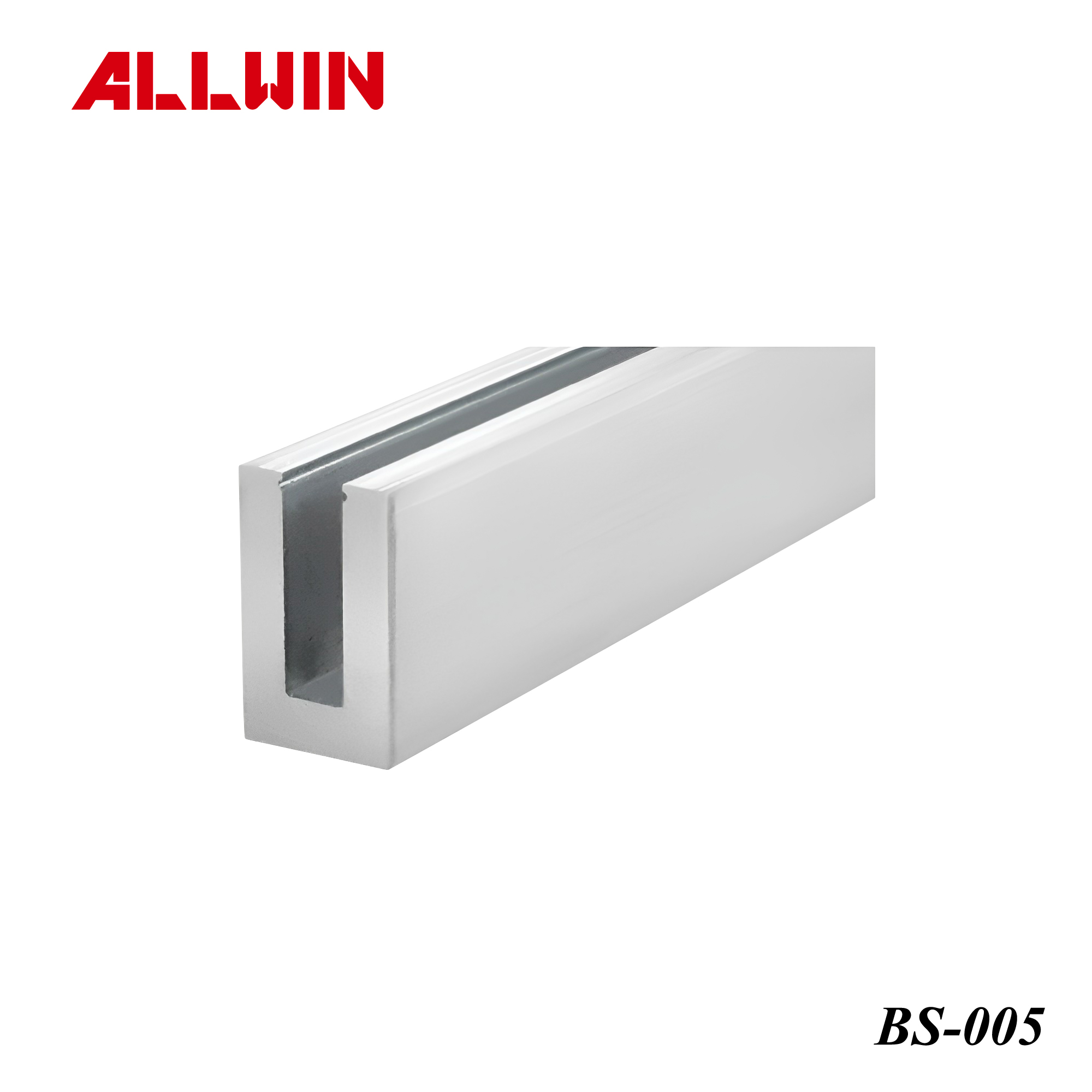
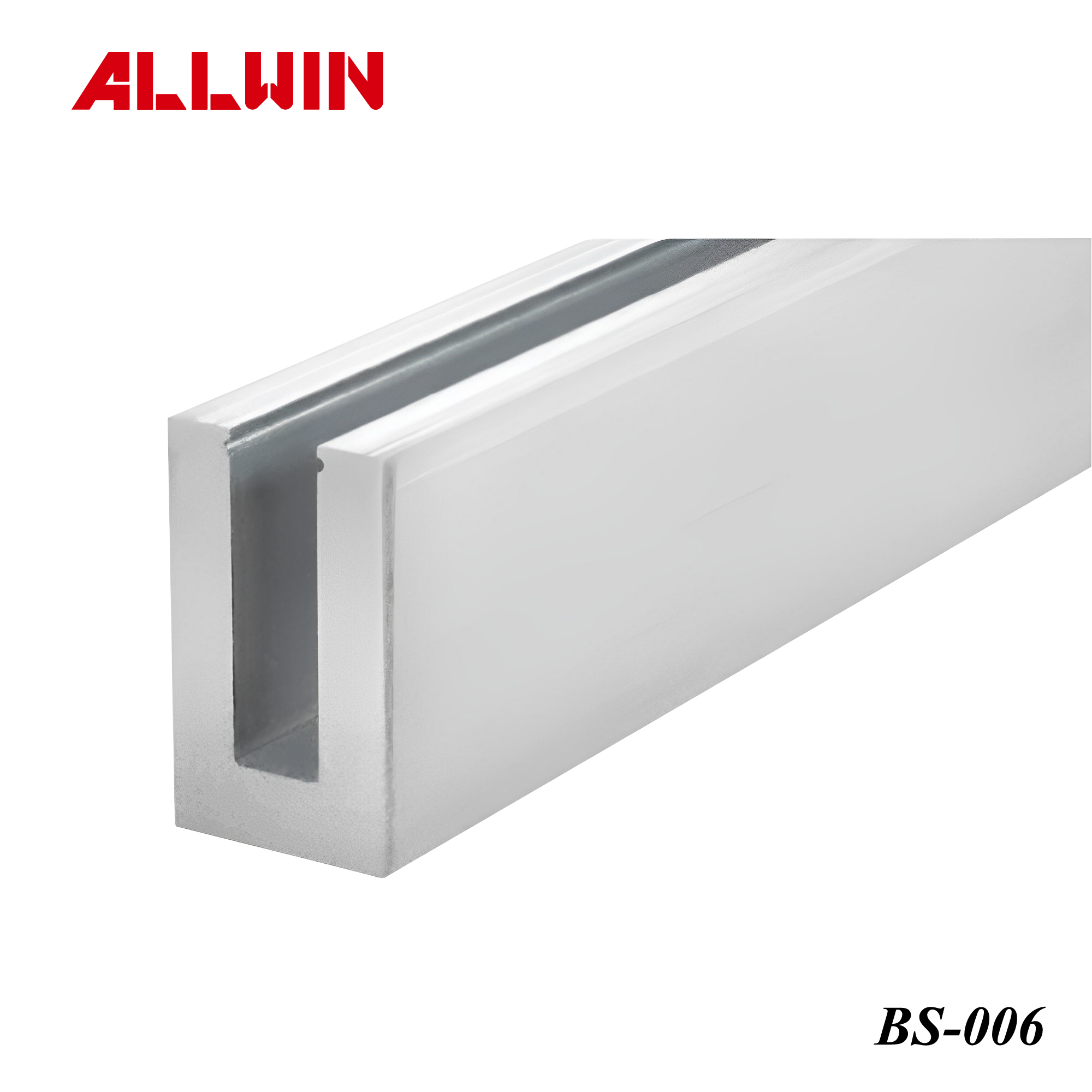
Glass composition is an important consideration when selecting a base shoe. Monolithic glass consists of a single glass sheet, while laminated glass combines multiple glass plies with an interlayer. ALLWIN BS-005, the Aluminum Laminated Glass Standard Square Base Shoe, and BS-006, listed as Aluminum Base Shoes for Monolithic Laminated Glass, provide options for different glass configurations. Buyers should confirm the total glass thickness, channel dimensions, and compatible internal retention components before selecting either model. Glass composition should also be distinguished from strengthening methods such as tempering, since these describe different characteristics. The appropriate glass specification must follow the approved railing design rather than channel width alone.
Cap Rails and Glass Edge Protection
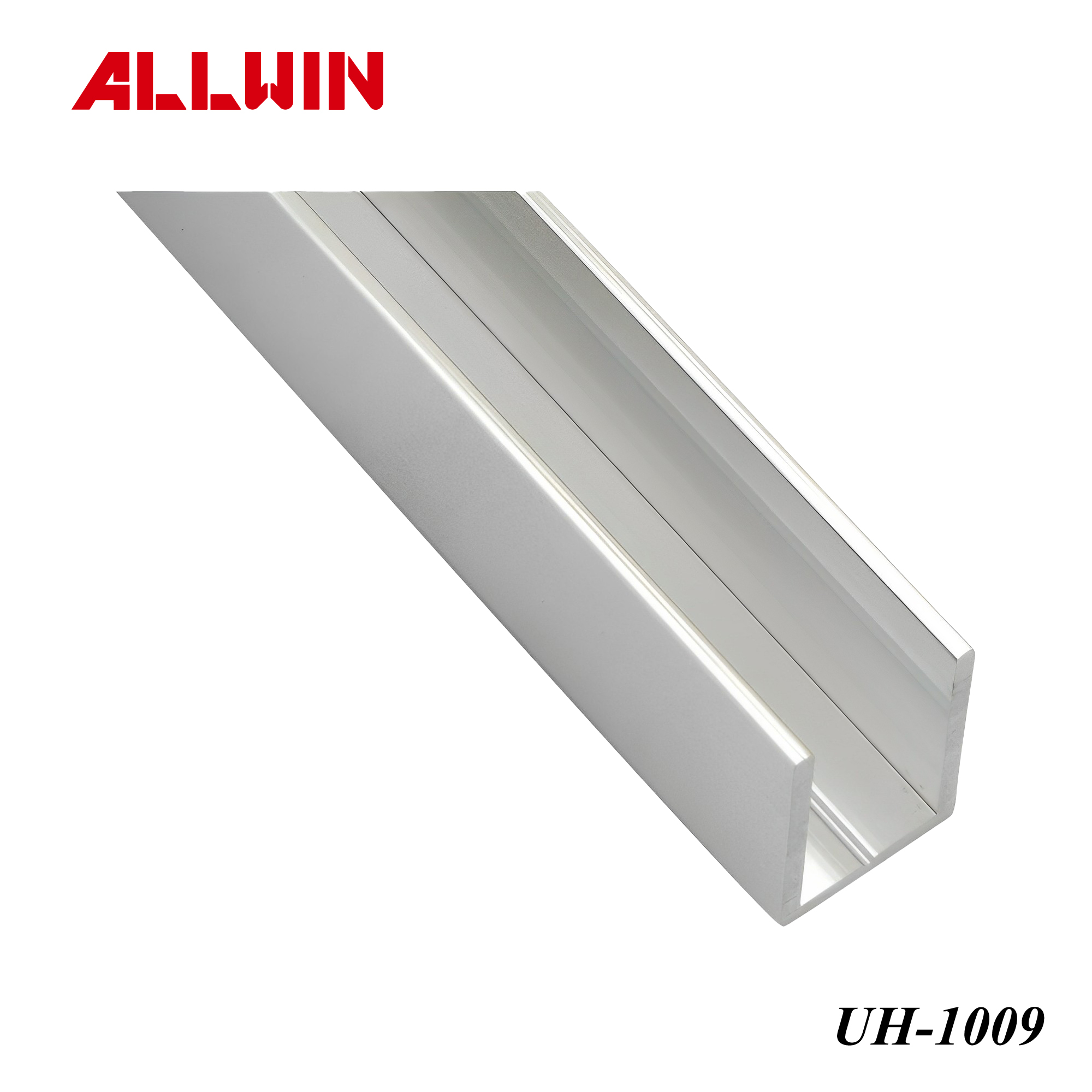
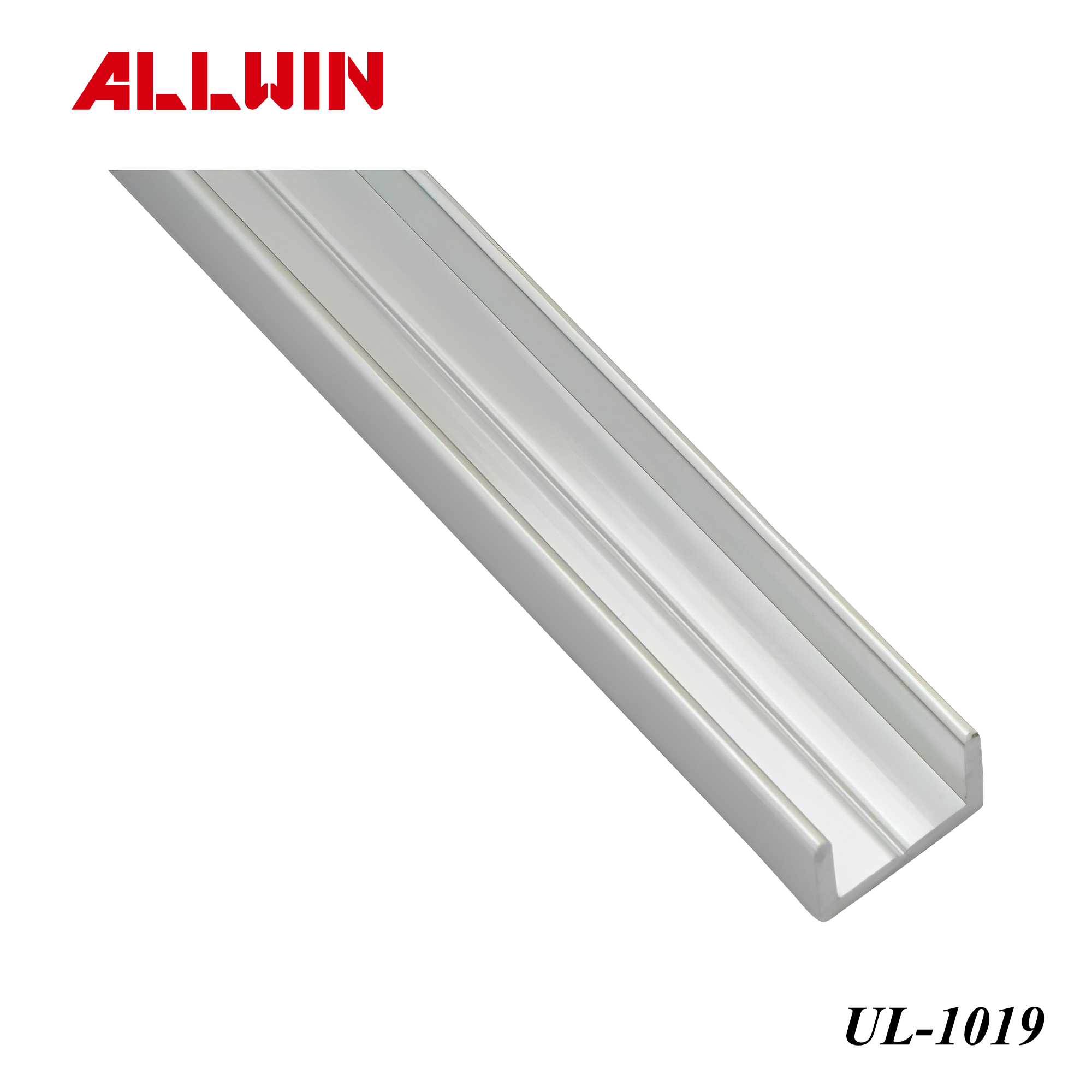
Cap rails and U channels provide finishing options for exposed glass edges and can help create a coordinated appearance across frameless railing installations. ALLWIN UH-1009 offers aluminum cap rail profiles, while UL-1019 provides aluminum U-channel options for glass edge finishing. Buyers can compare profile shapes, dimensions, glass compatibility, and available finishes according to the intended installation. Corner transitions and connections between adjoining profiles should also be considered when planning the railing layout. Although these components can provide edge finishing or protection, their ability to serve a structural function must be confirmed separately under the approved system design. A decorative edge profile should not automatically be treated as a structural top rail.
Matching Frameless Glass Railing Hardware to Your Project
Selecting frameless glass railing hardware begins with confirming the glass and base shoe specifications. Buyers should identify the approved glass composition, overall thickness, panel dimensions, and the required channel profile before comparing products. The base shoe must also accommodate the specified internal retention system, including compatible wedges, gaskets, or other fixing components. A glass panel that physically fits inside a channel is not necessarily compatible with the complete railing system. Reviewing technical drawings and the approved glazing configuration before ordering helps prevent installation conflicts and unsuitable component combinations.
Structural mounting requirements are equally important. The supporting substrate, anchor type, fixing positions, edge distances, and available installation space must be evaluated together with the channel and glass panels. A base shoe profile alone does not determine the structural performance of a frameless glass railing. The complete assembly, including the glass, channel, retention components, anchors, and supporting structure, must be verified against applicable guardrail load requirements and local building regulations. Buyers should also confirm whether the approved design requires a top rail and ensure that all mounting details are coordinated before fabrication and installation.
Build Your Frameless Glass Railing with ALLWIN Hardware
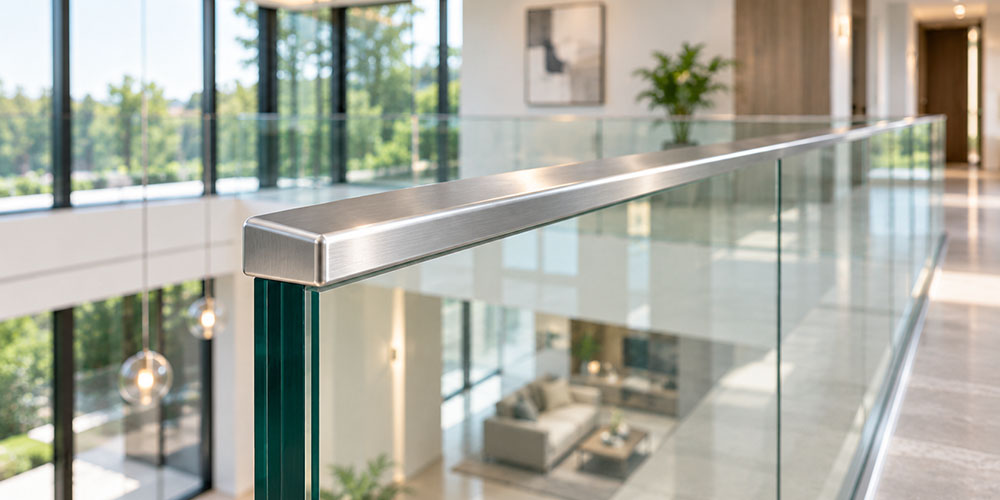
A frameless glass railing achieves its clean appearance through carefully coordinated glass panels and supporting hardware. Continuous base shoes, individual spigots, and side-mounted standoffs provide different mounting approaches, while channel profiles and edge finishing components influence the appearance of the completed system. Selecting suitable hardware requires checking glass composition, panel dimensions, mounting conditions, internal fixing components, and structural requirements rather than relying on product appearance alone.
appearance alone. ALLWIN offers aluminum glass base shoes and edge finishing components for architectural glass applications, including standard, low-profile, and heavy-duty channels, as well as profiles intended for different glass configurations. Cap rails and U channels provide additional options for coordinating exposed glass edges. Buyers can provide glass specifications, railing drawings, mounting details, preferred finishes, and required quantities for further product evaluation. Contact ALLWIN to discuss available base shoe options, glass edge finishing profiles, and OEM or ODM requirements for your frameless glass railing project.

ALLWIN
ALLWIN mit Sitz in Taiwan ist ein führender Hersteller hochwertiger Architekturbeschläge. Mit über 25 Jahren Branchenerfahrung betreiben wir ein vollausgestattetes Werk mit modernster Gießerei- und CNC-Bearbeitungstechnik. Wir bieten maßgeschneiderte Lösungen für Geländersysteme und Türbeschläge. Durch die Kombination von strengen Prüfverfahren und zuverlässigem Service bauen wir langfristige Partnerschaften mit Kunden weltweit auf.